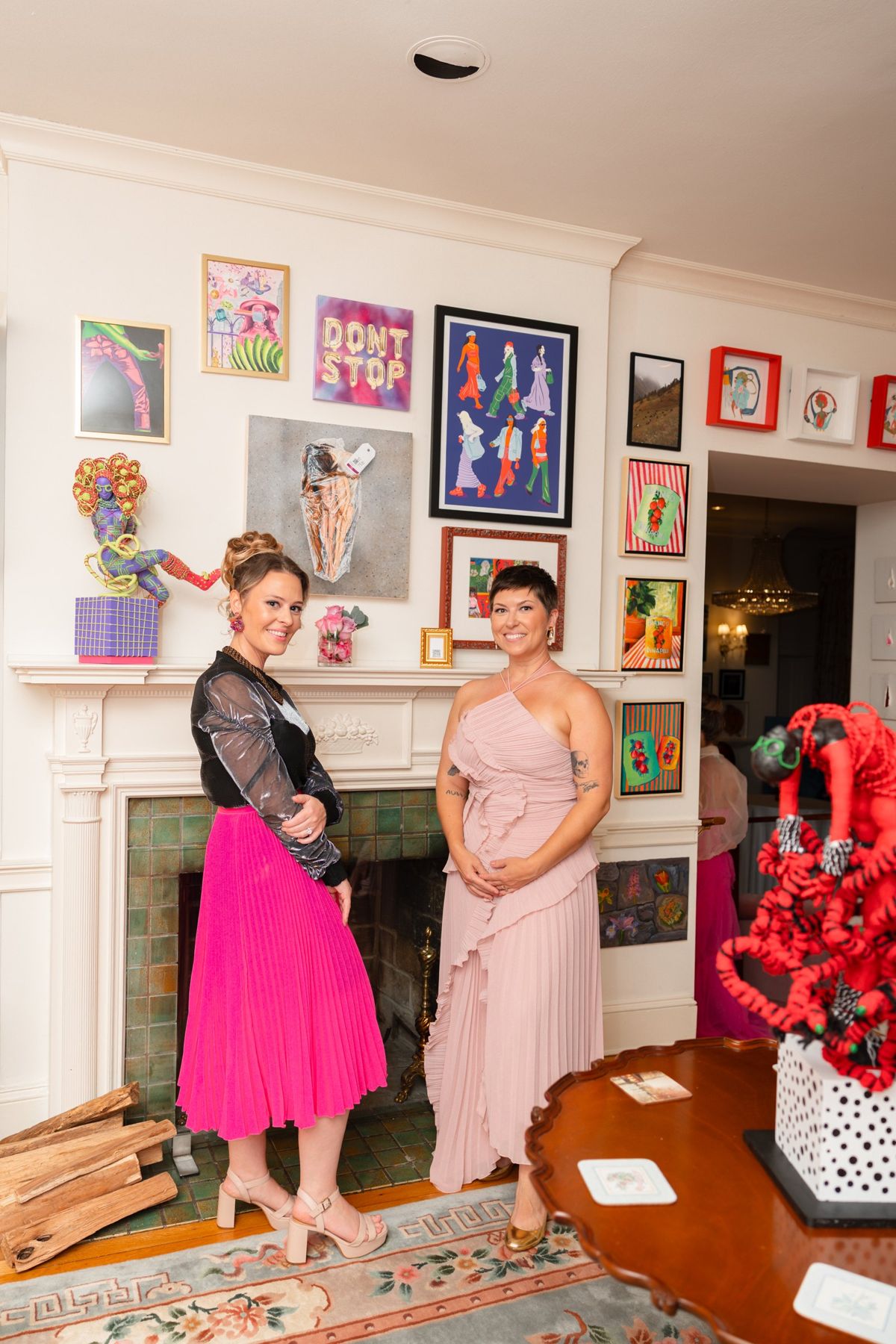
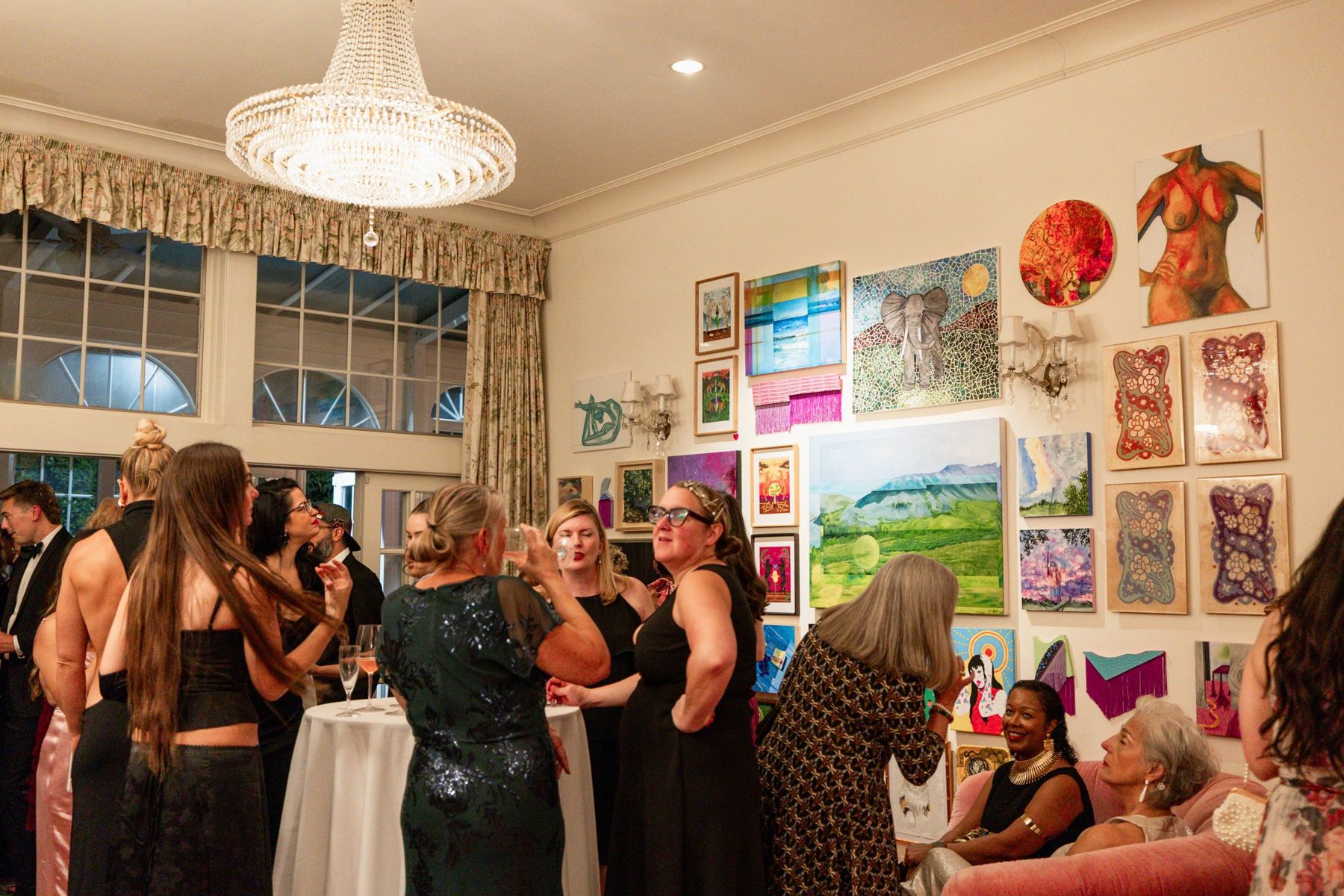
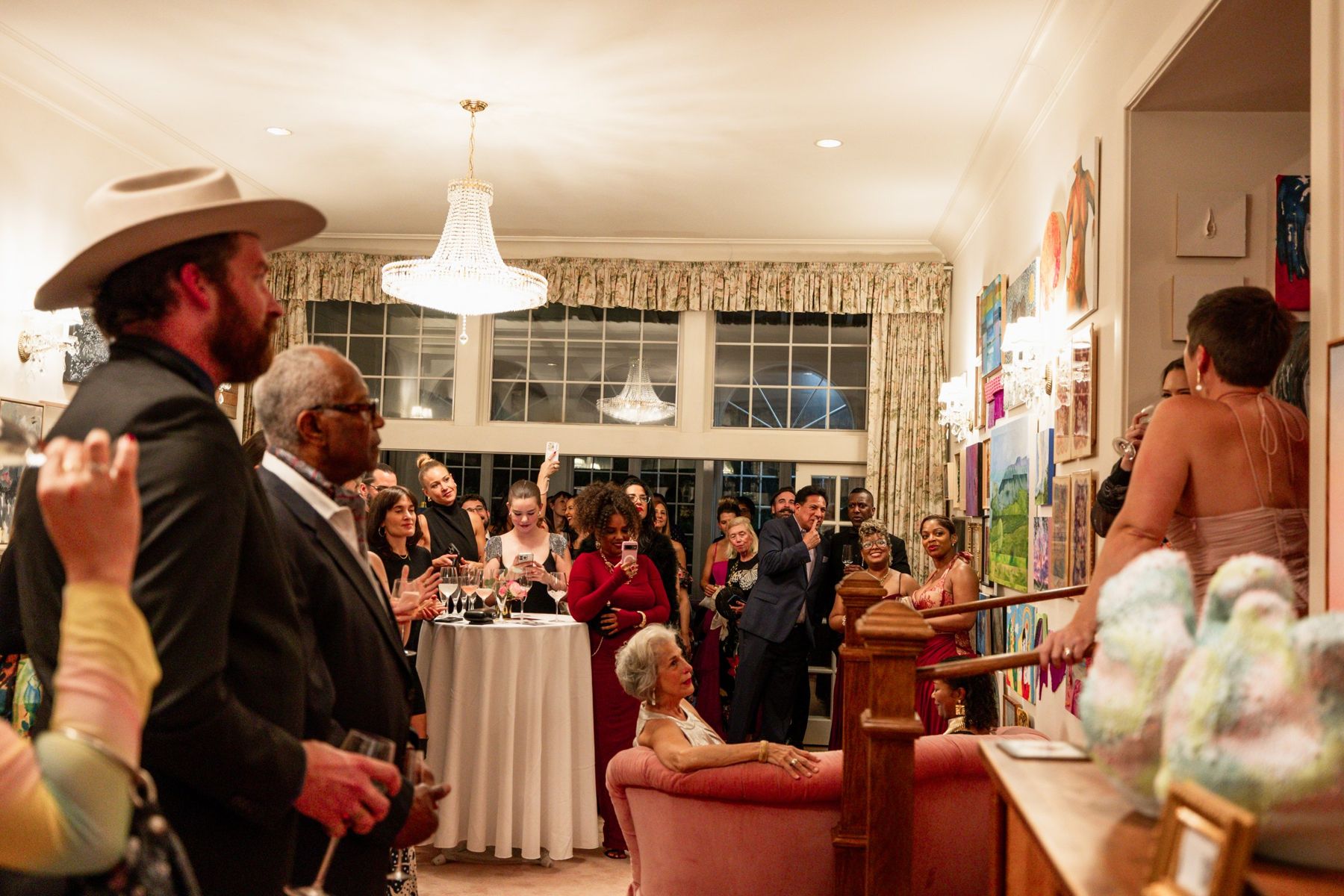
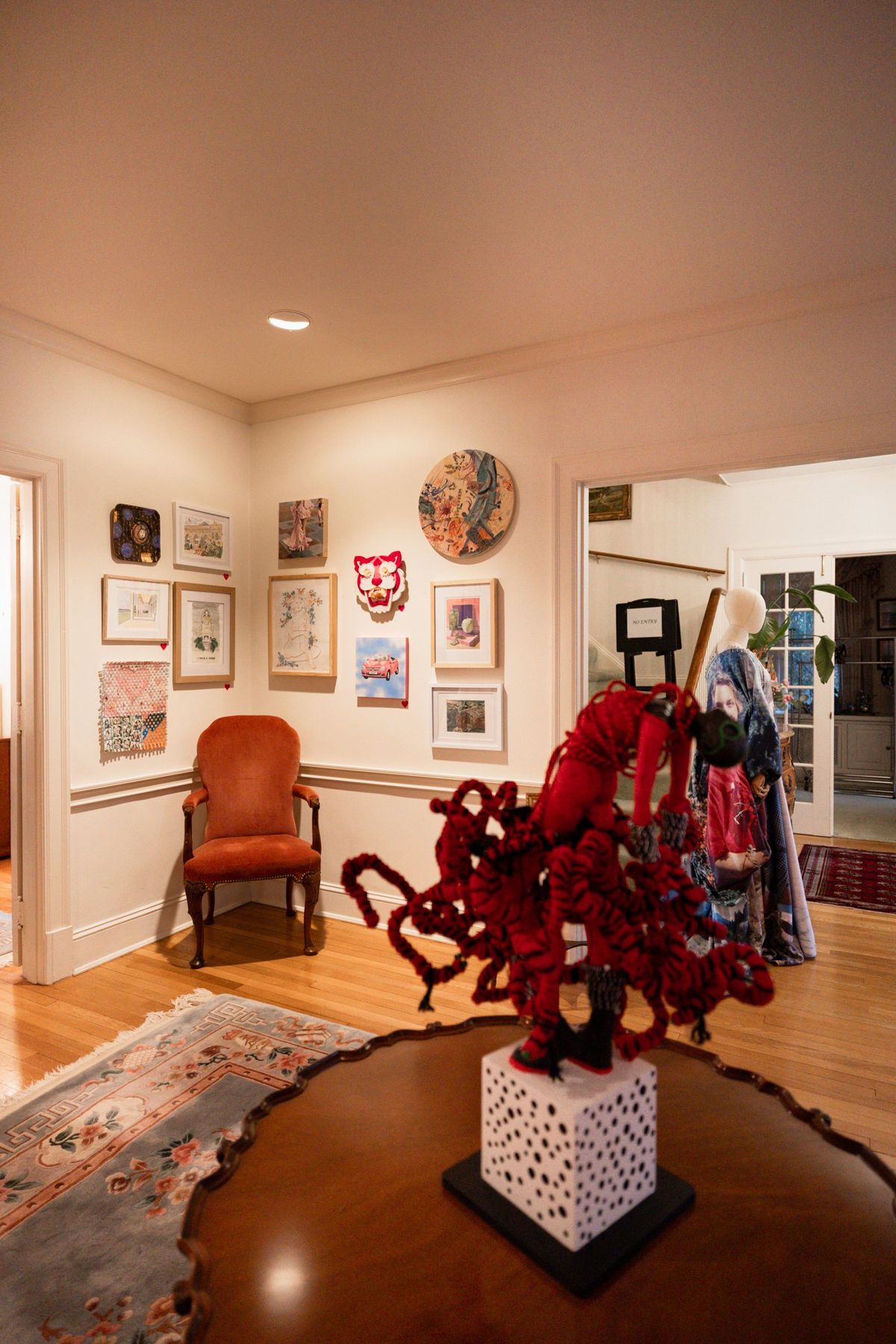
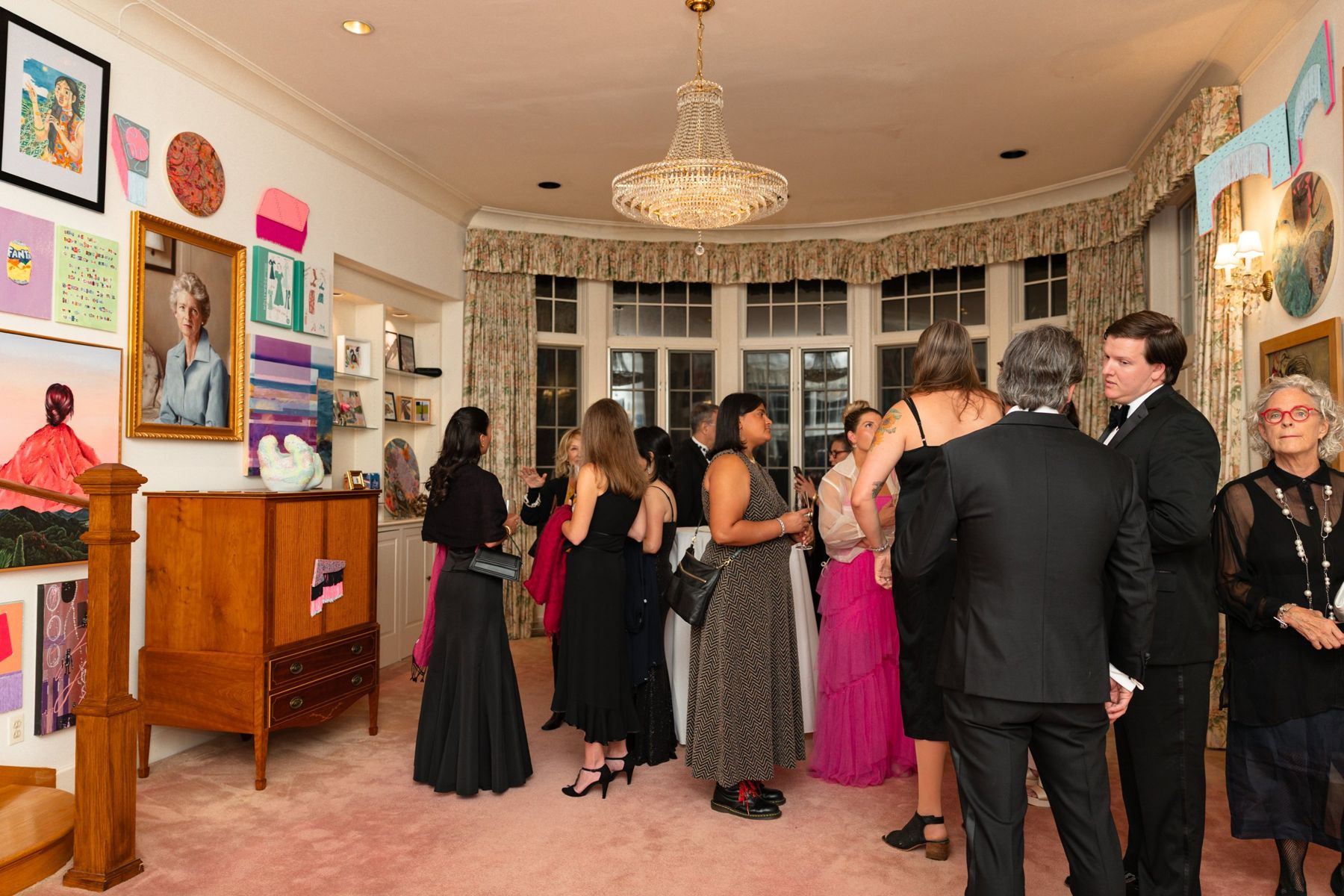
There is a particular hush that falls over a room when the art outnumbers the people. It happened on the night of Friday, September 25, somewhere between the front parlor and the stair rail, when a black tie crowd stopped talking for a beat and simply looked up.
This issue exists to hold onto that beat. Girlism ran for three days and then came off the walls, as promised. What follows is the record: the house, the hang, the two women who willed it into being, the artists who filled it, and the people who came, bought, and wrote to say thank you.
Read it the way you walked the show. Slowly, and with a glass in hand.
- 03The Most Beautiful Room in WashingtonThe cover story
- 06The House That Jane BuiltOur host, Dr. Jane Ervin
- 07Compatible Measures of DelusionThe founders
- 09Fourteen Walls, Room by RoomThe hang
- 12Twelve to KnowThe artists
- 15Overheard, Posted, and Written InThe guestbook
- 17Until Next YearThe last word
Every piece in the show, wall by wall, with the artist, the size, and the price. Nearly everything is still available.
thedistrictconsortium.com/wall-guide.html
Published by The Consortium, the women-led collective founded by Sarah Jamison and Stephanie Ervin.
Gala photographs by Taylor Cuozzo Dronebarger, TCD Creative.
thedistrictconsortium@gmail.com
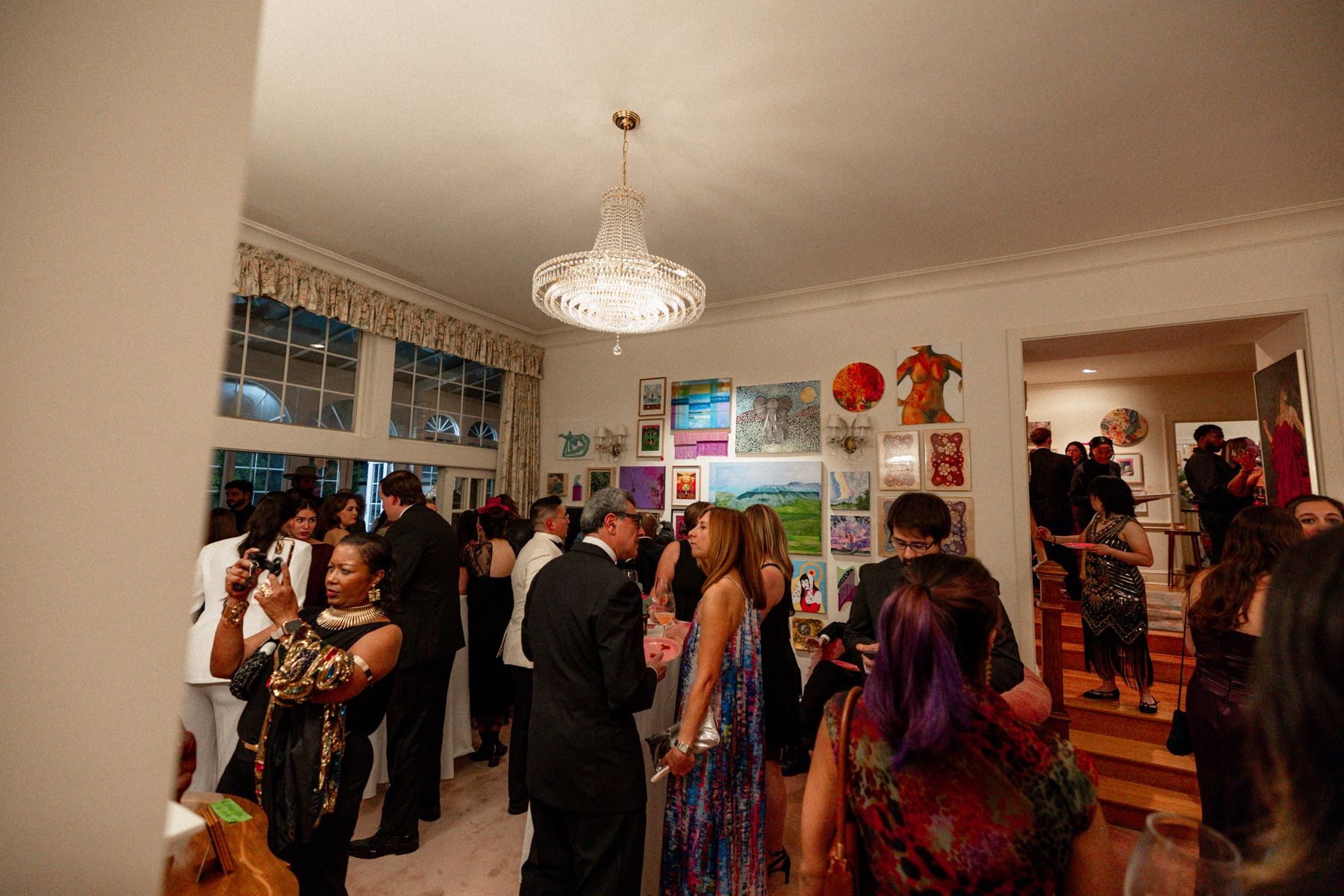
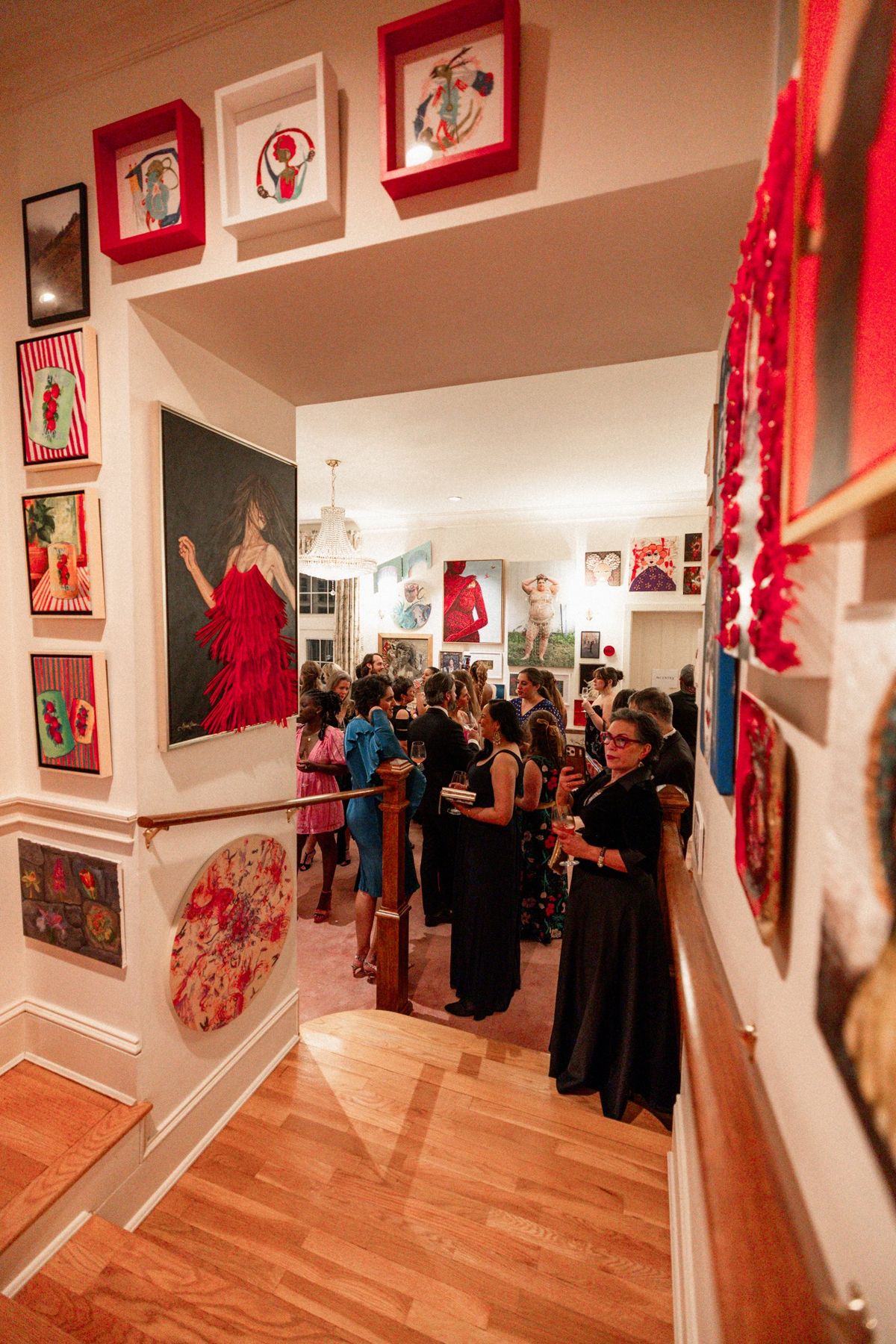
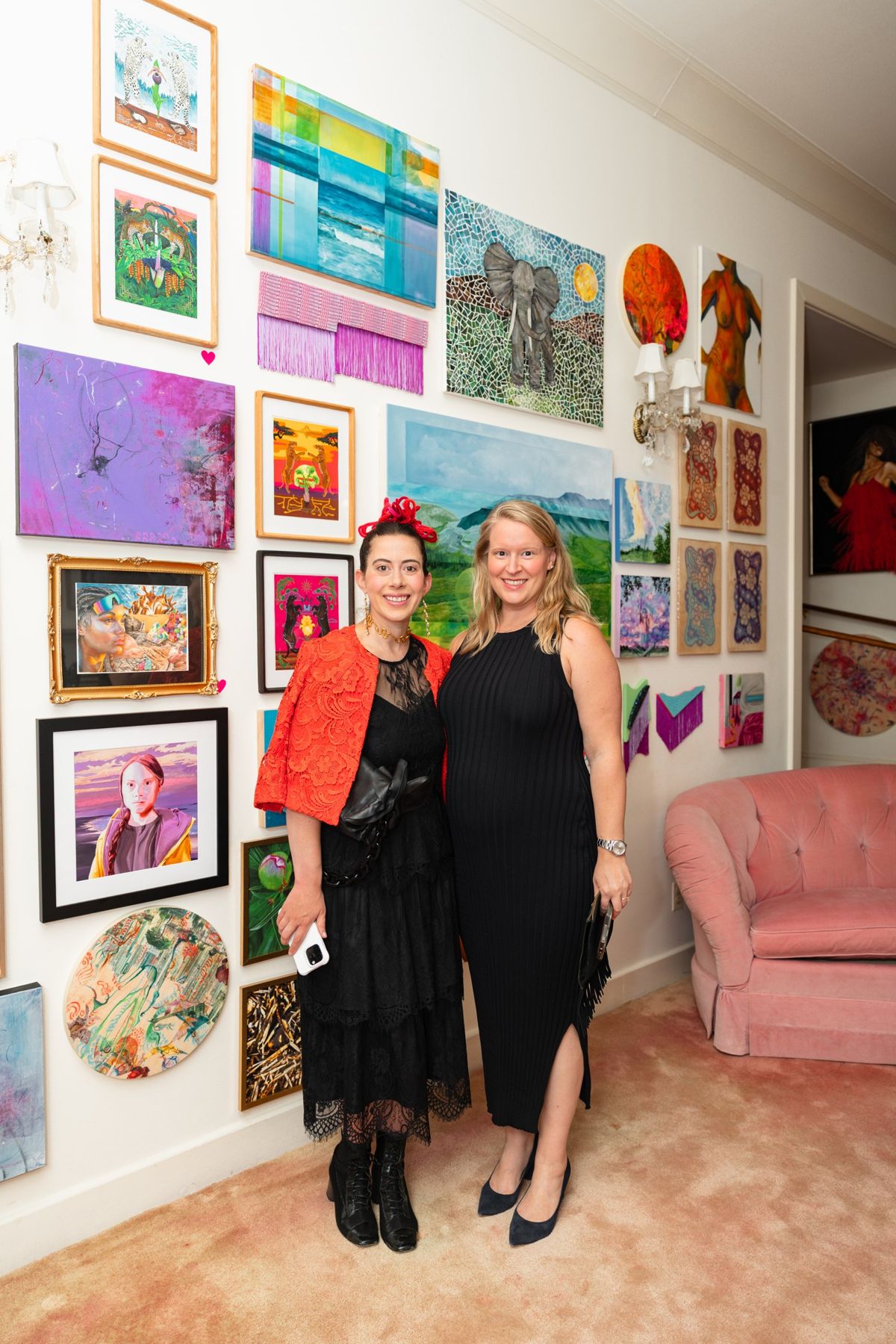
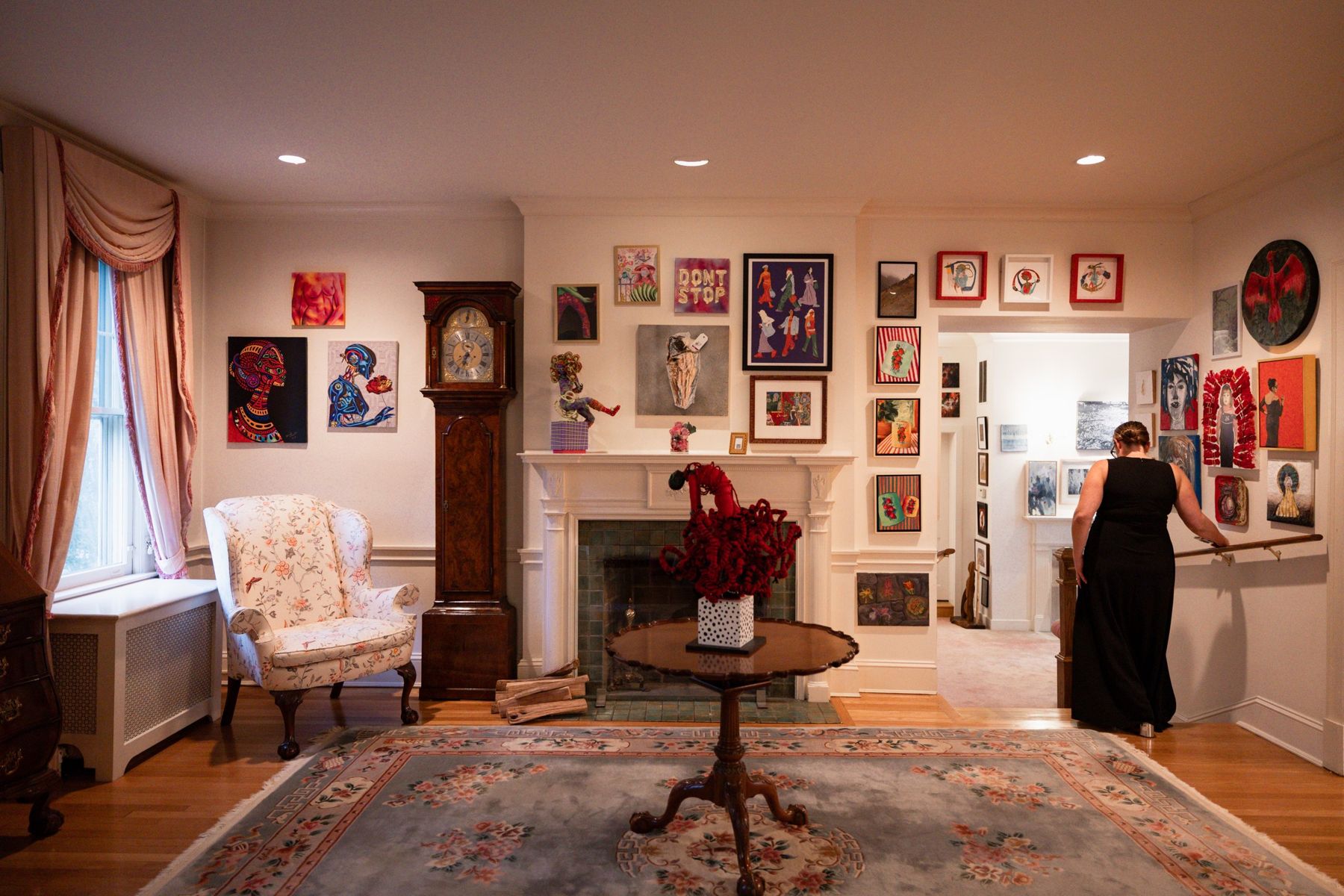
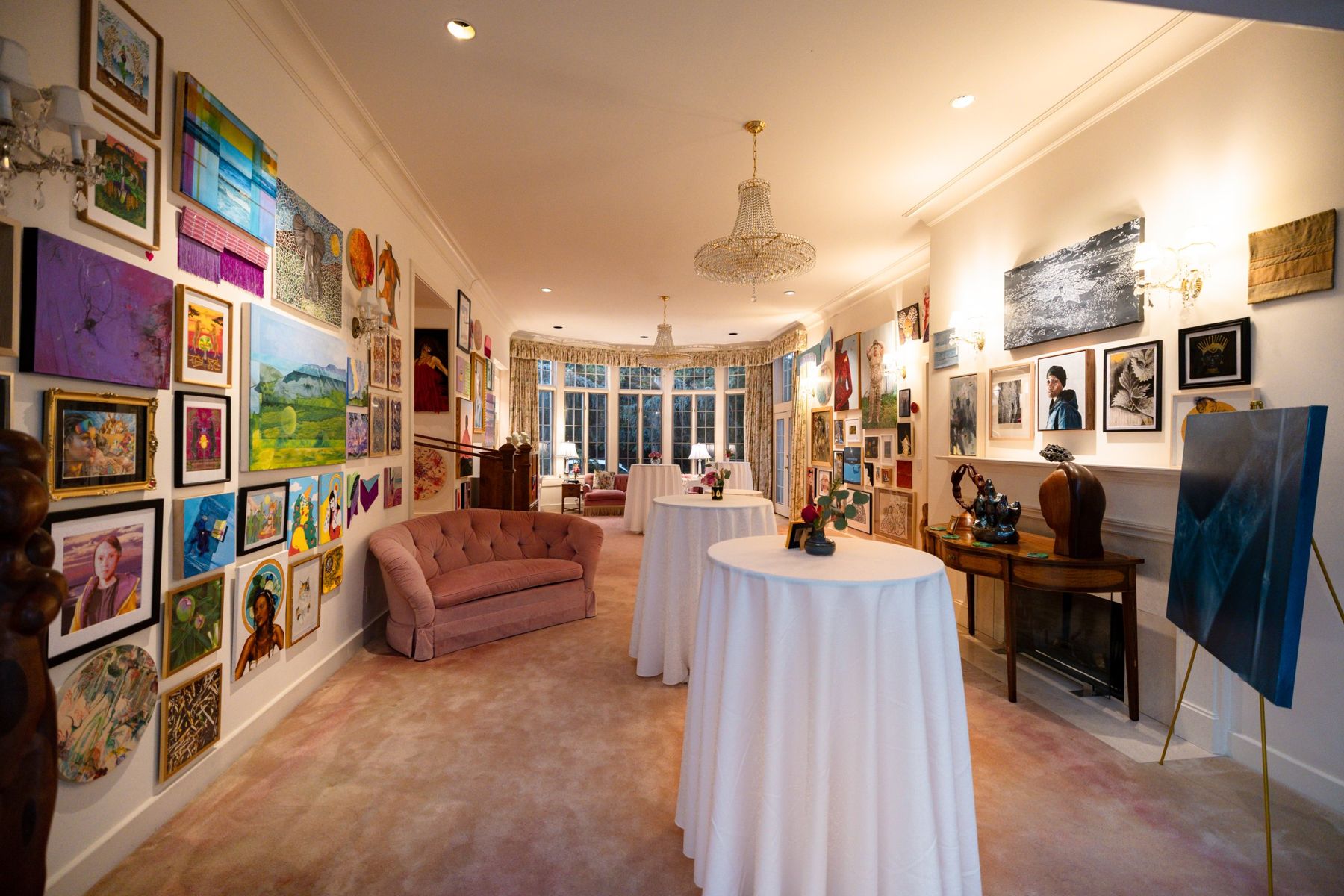
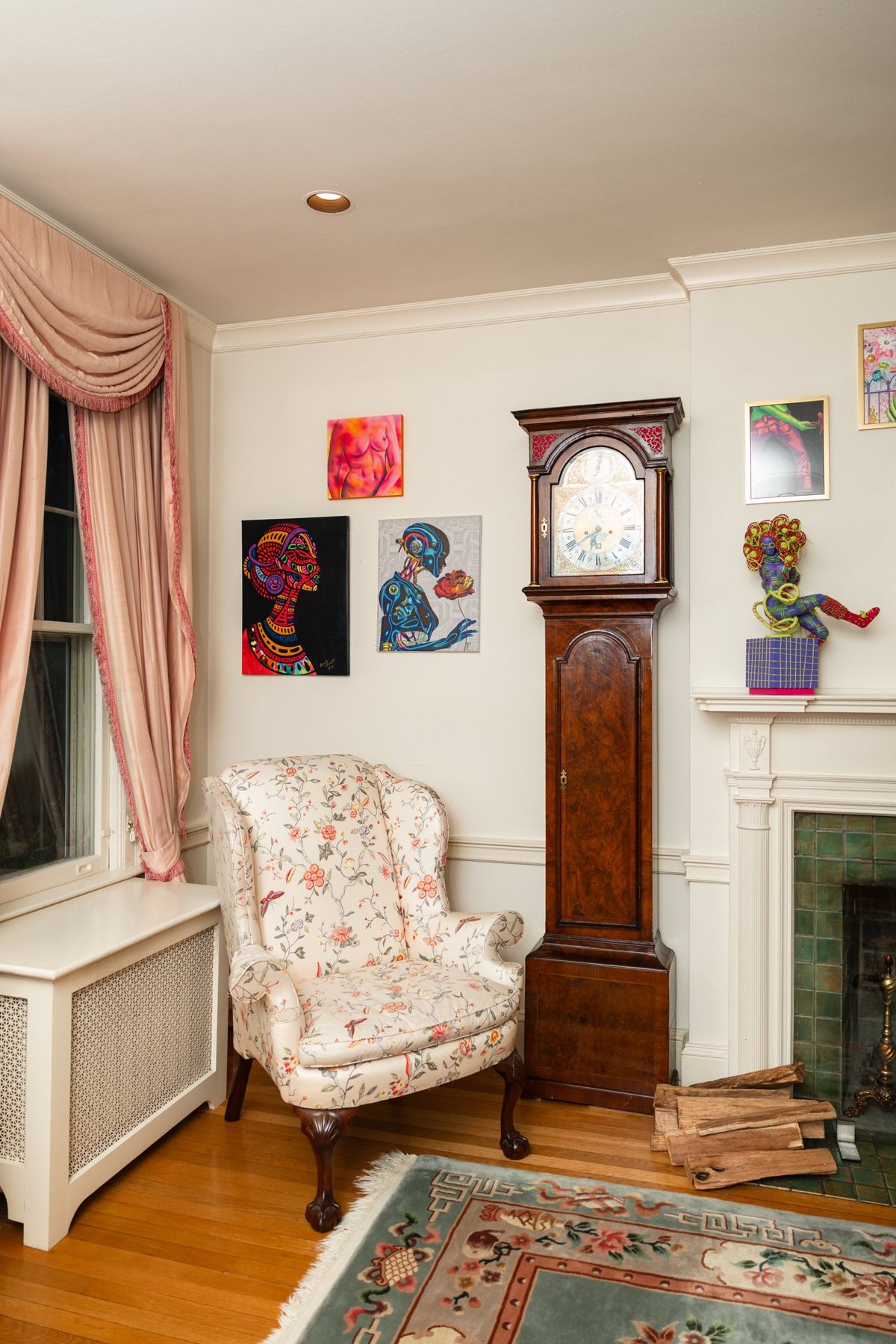
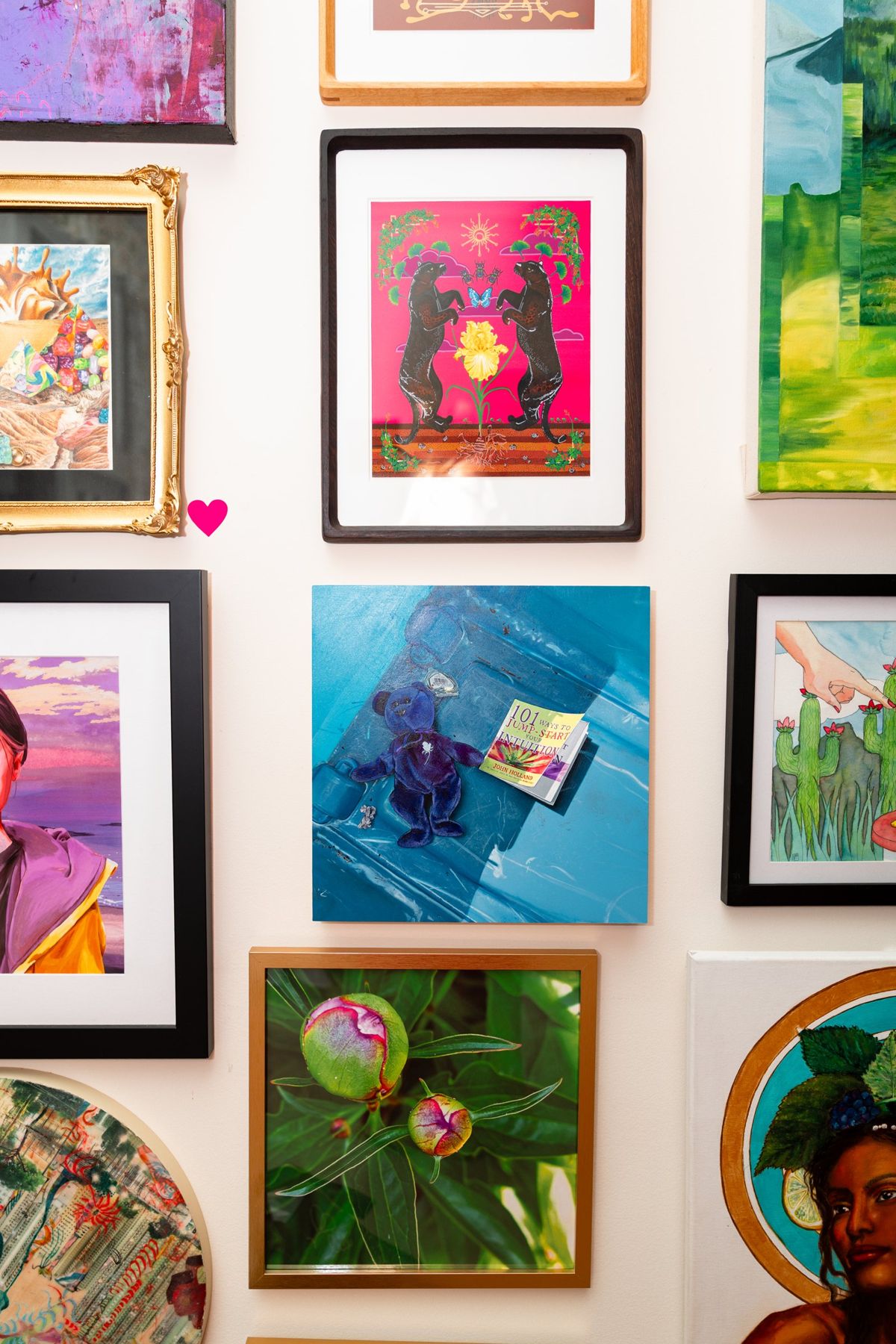
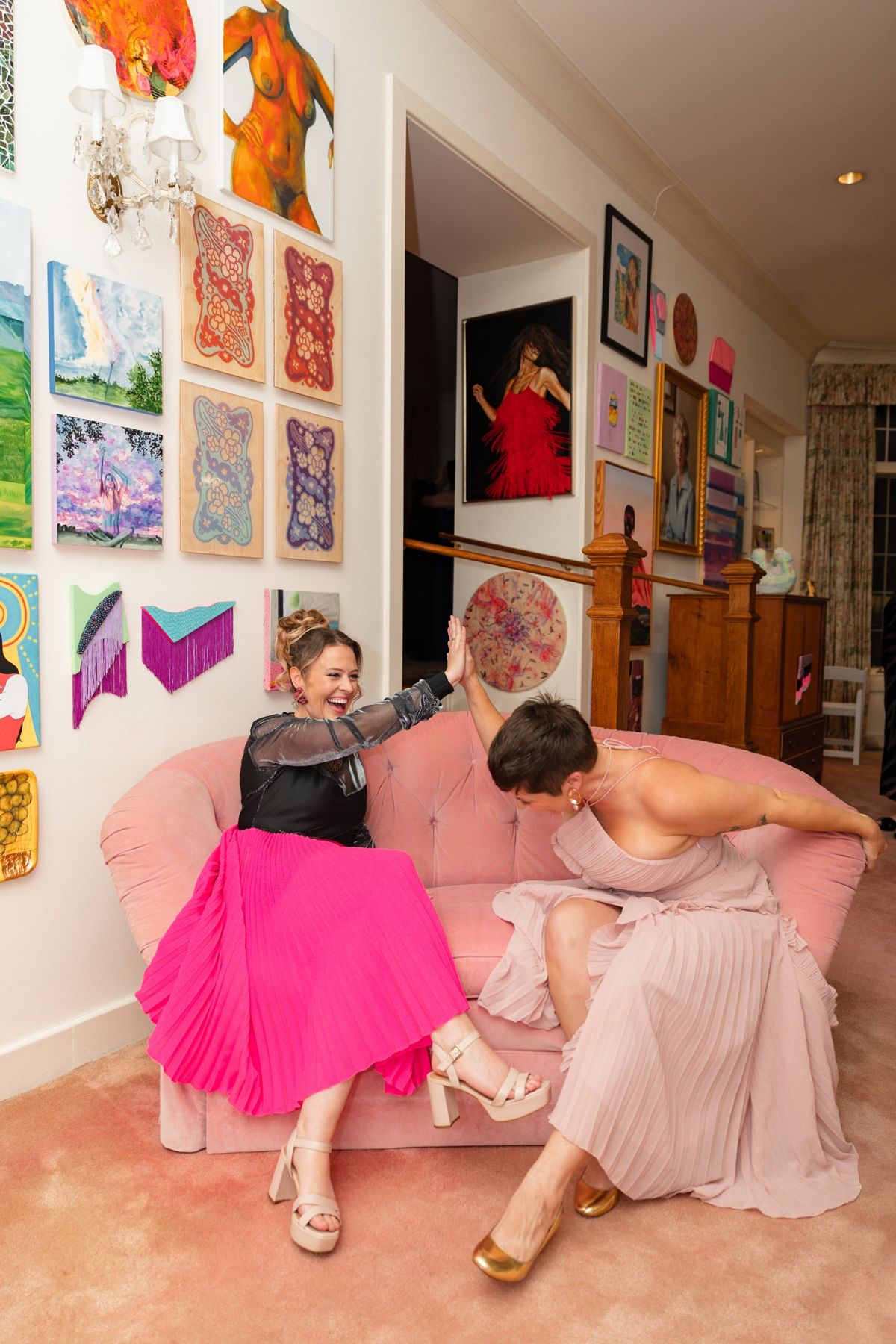
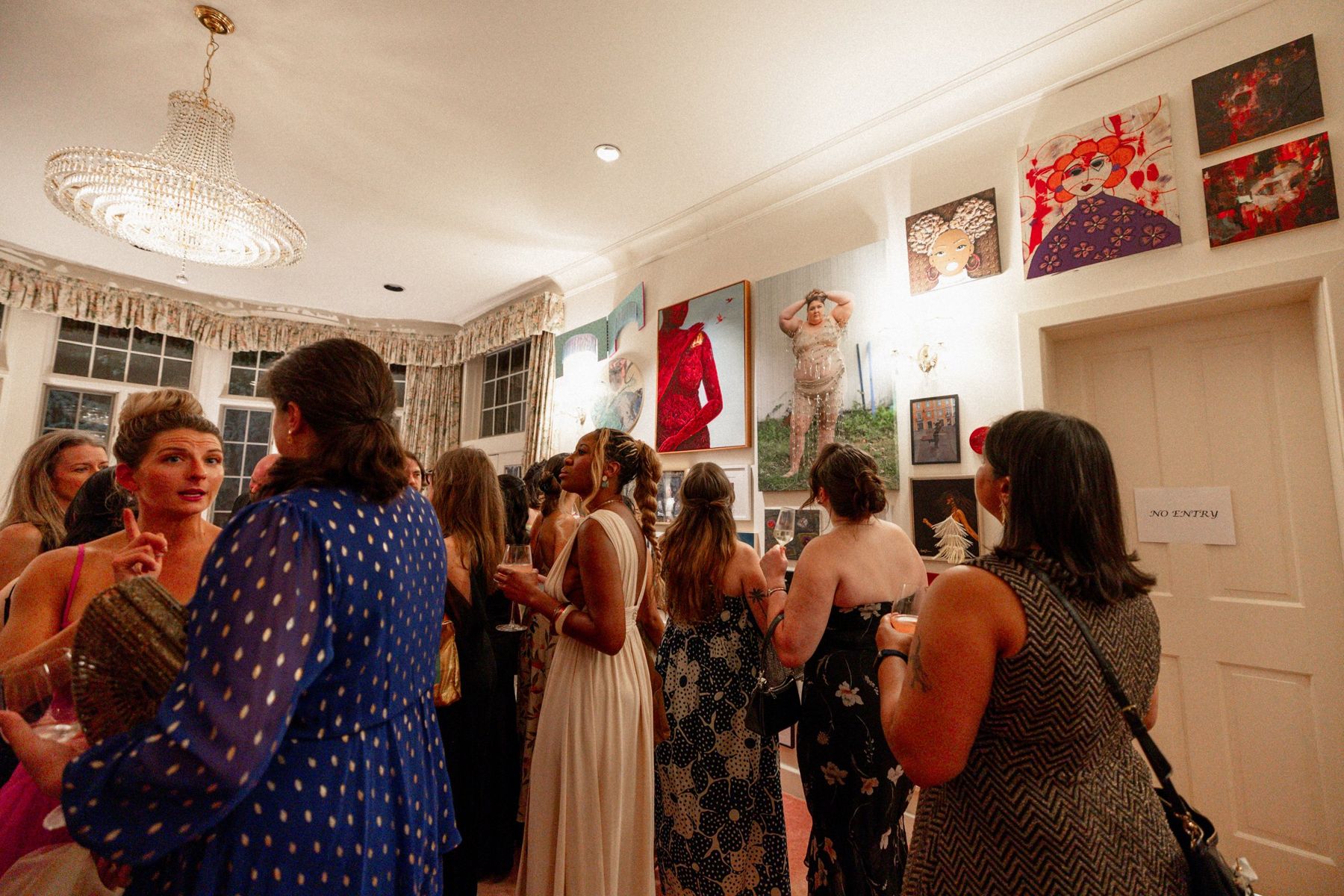
The invitation promised a black tie gala in a private mansion, address released to ticket holders only. What it did not quite prepare anyone for was the density. Girlism, presented by The Consortium, was hung salon-style in the fullest sense of the term: every wall alive, every mantel occupied, sculpture on the tables, on the floor, on the desk in front of the mirror, and one small painting tucked deliberately behind a five-foot wood sculpture with a note in the program that read, look for it in person.
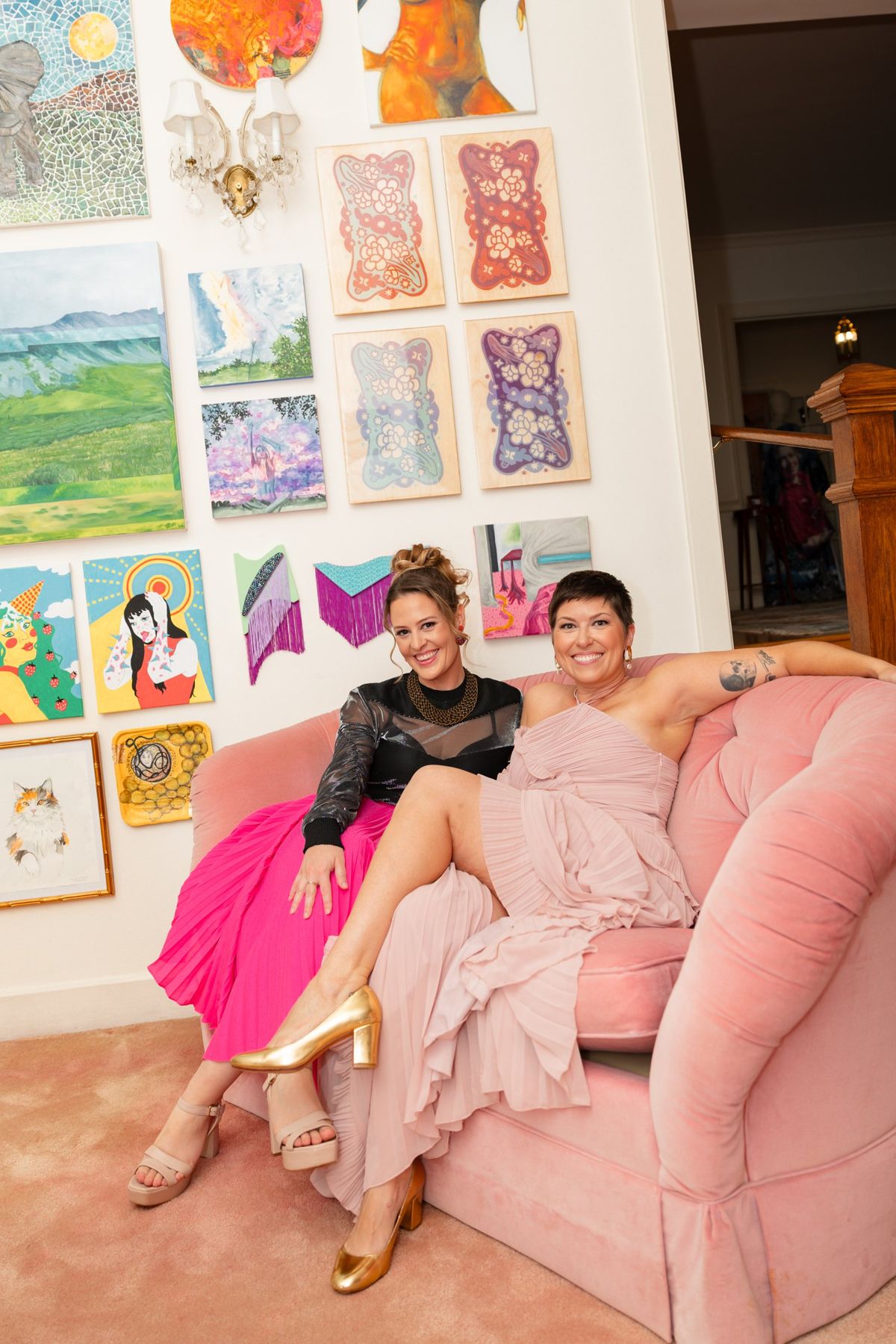
The Consortium is the women-led collective founded by Washington artists and collectors Sarah Jamison and Stephanie Ervin. Girlism is its first annual show, and it set the precedent in one move. An open call over the summer drew submissions from across the region. What came back, in the founders' words, was not a single voice but a room full of them, some tender, some funny, some furious. The curatorial decision was to let that stay uncomfortable rather than smooth it into a theme.
Stephanie Ervin
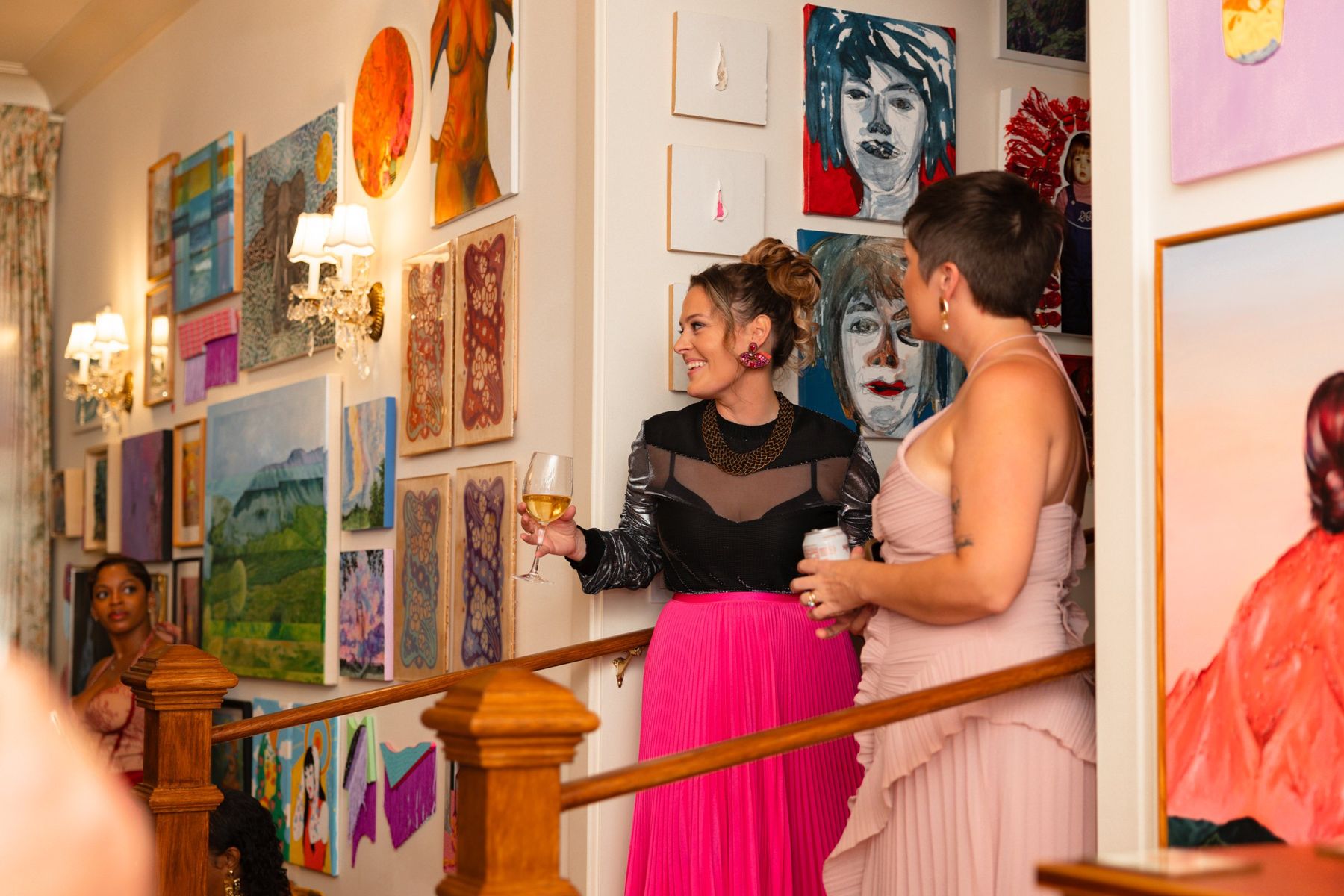
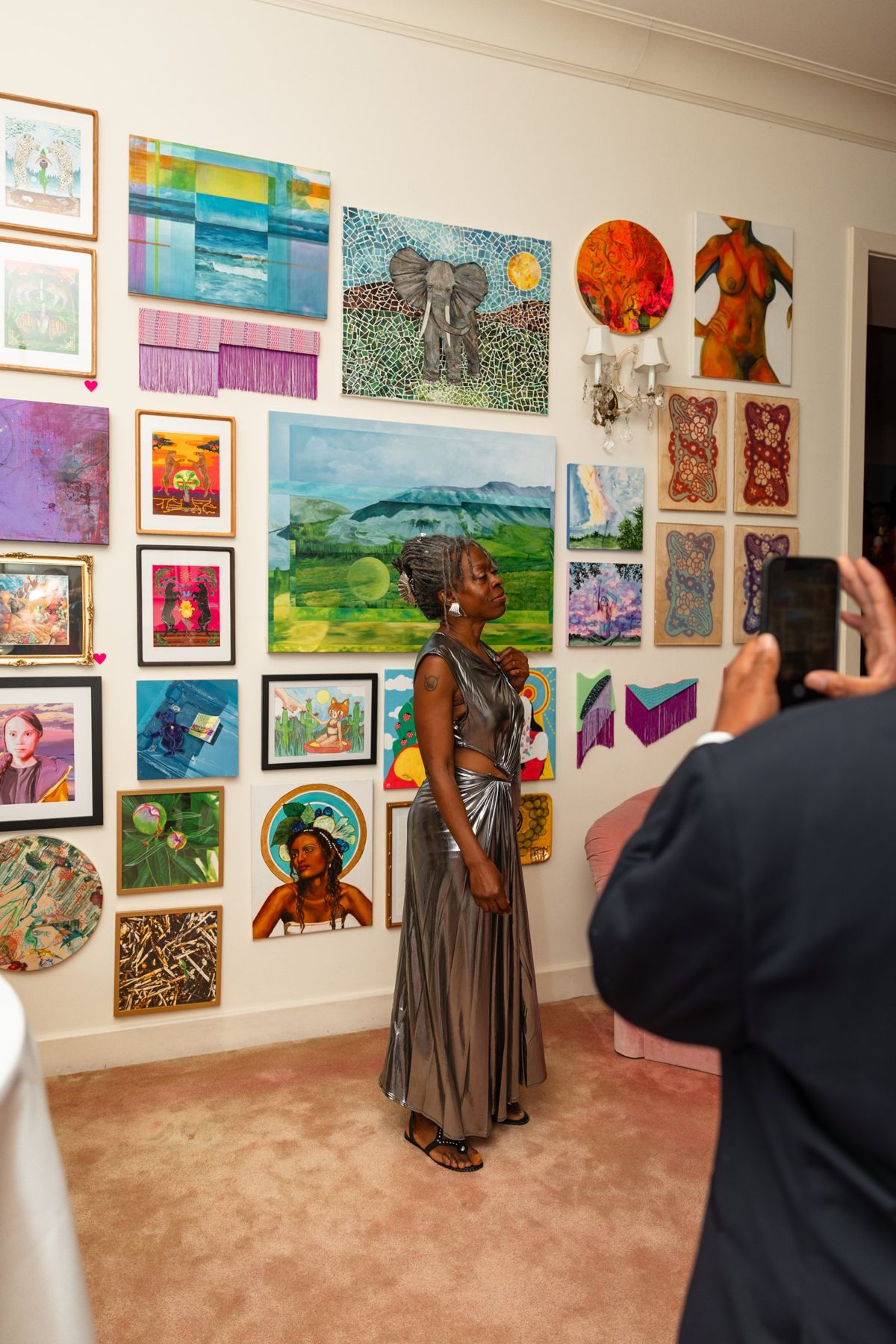
So the wall got all of it. Painting, photography, sculpture, textile, ceramics, printmaking, digital work, embroidery, felt and rhinestones. Artists with fifty-year careers hung beside artists in their first group show, and no one was sorted by room or by rank. Margery Goldberg's chainsaw-carved wood shared the mantel wall with Sarah Jamison's silver-leafed Daria and a mosaic elephant. Kelly Posey's encaustic tondos, cut from decades of National Geographic, orbited Katty Huertas's surrealist figures on the big gallery wall. In the entryway, before a guest had handed off a coat, Deborah Lash's Hold Still, Janet, a photograph bound in textile and safety pins, stood sixty-six inches tall and set the tone.
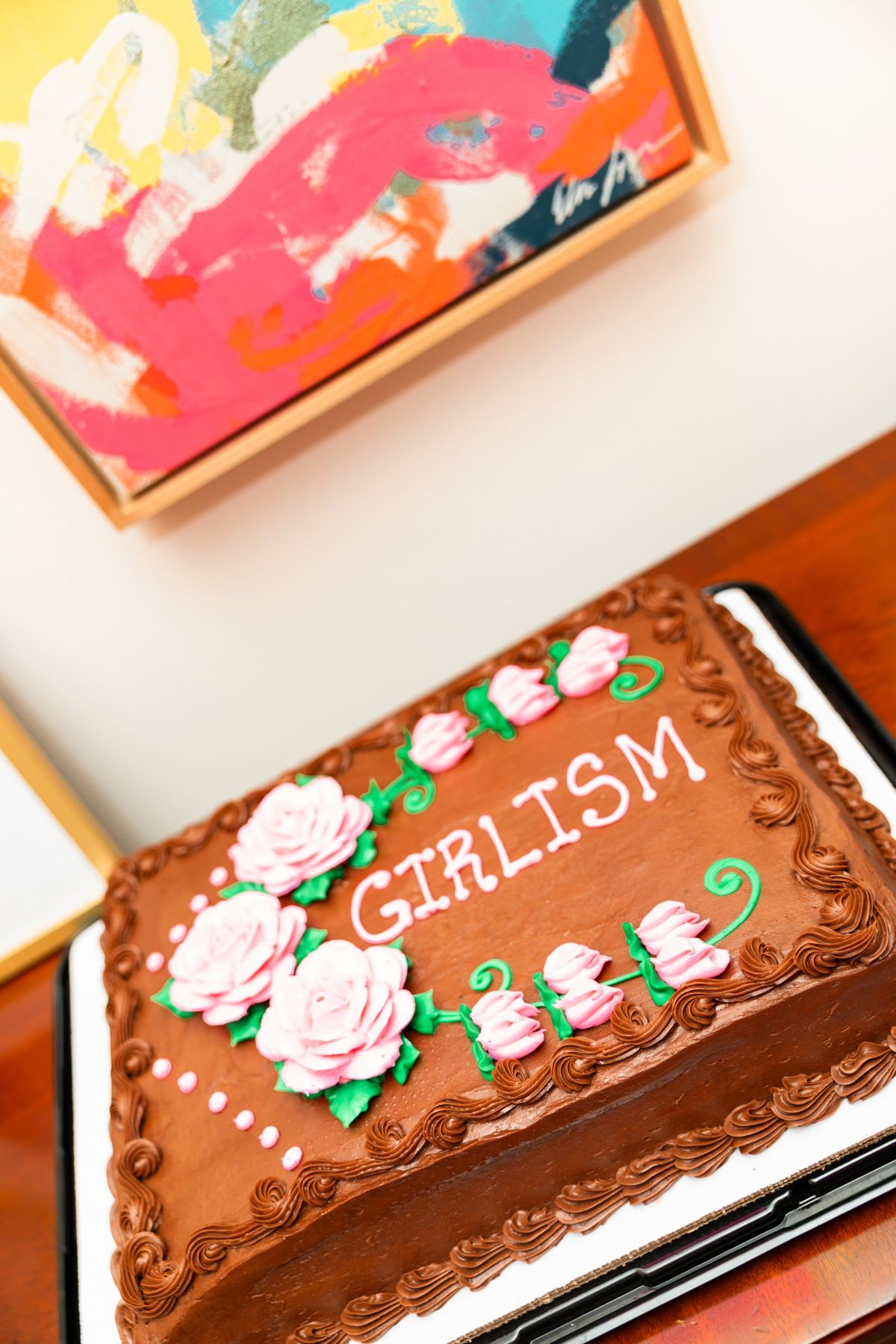
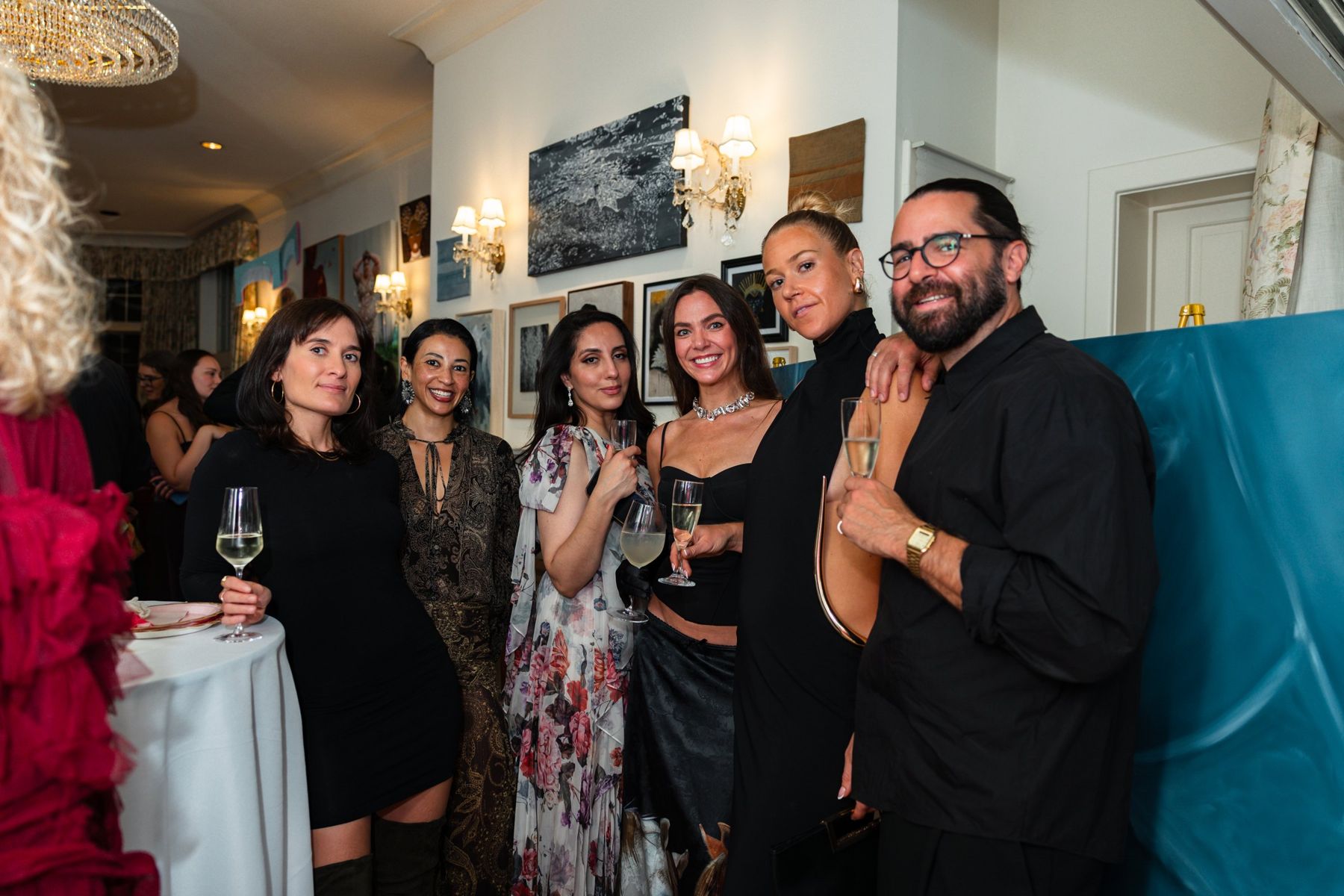
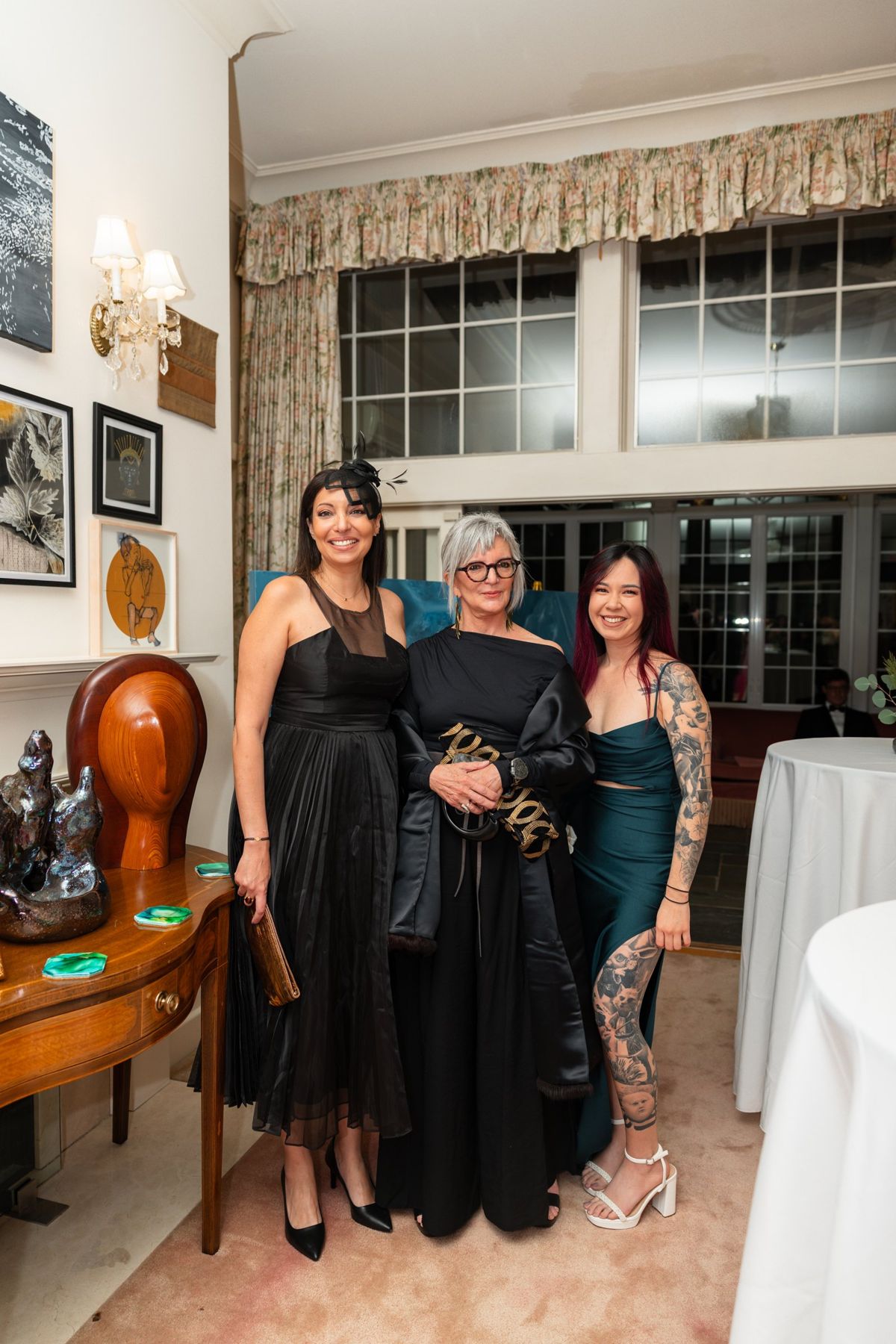
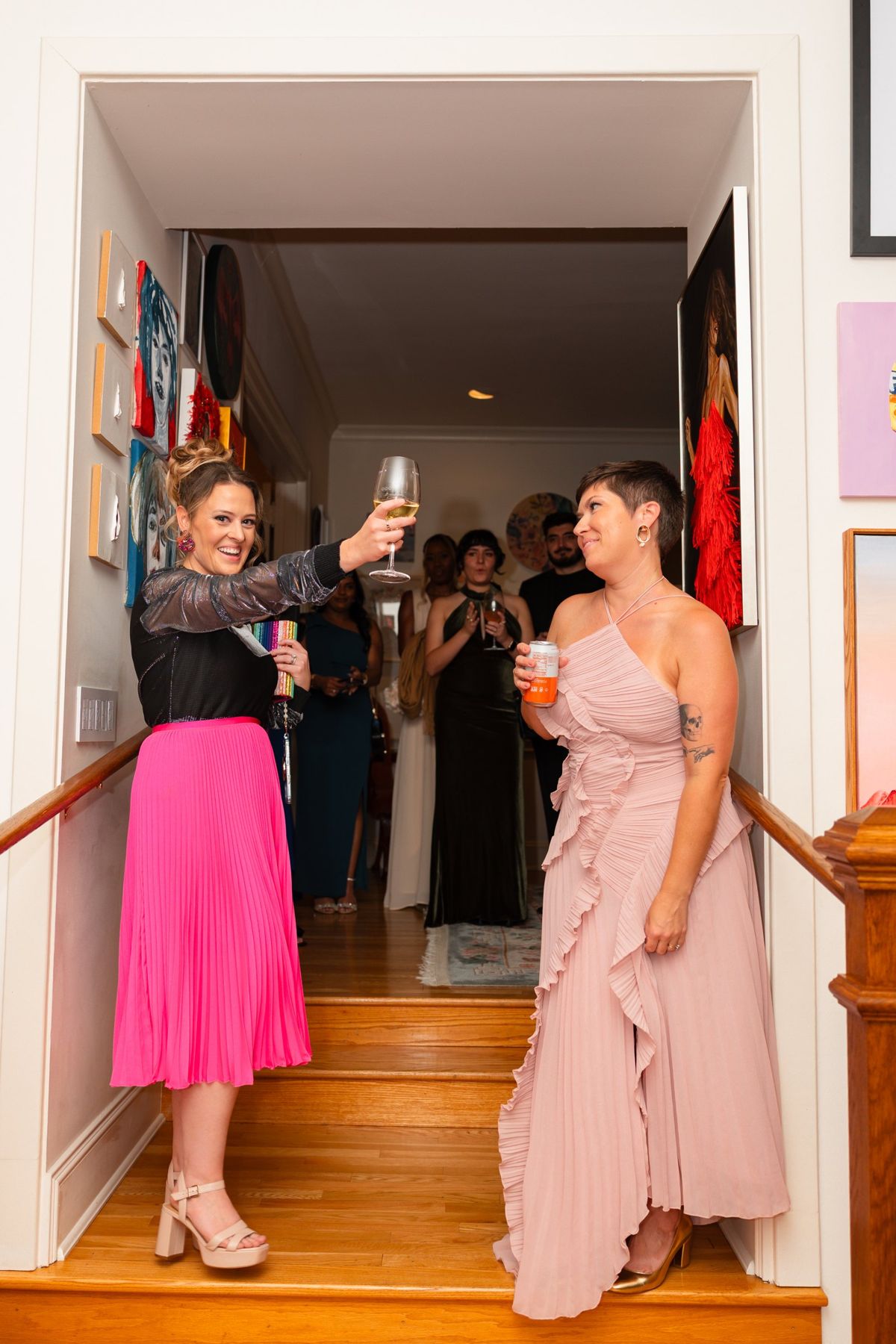
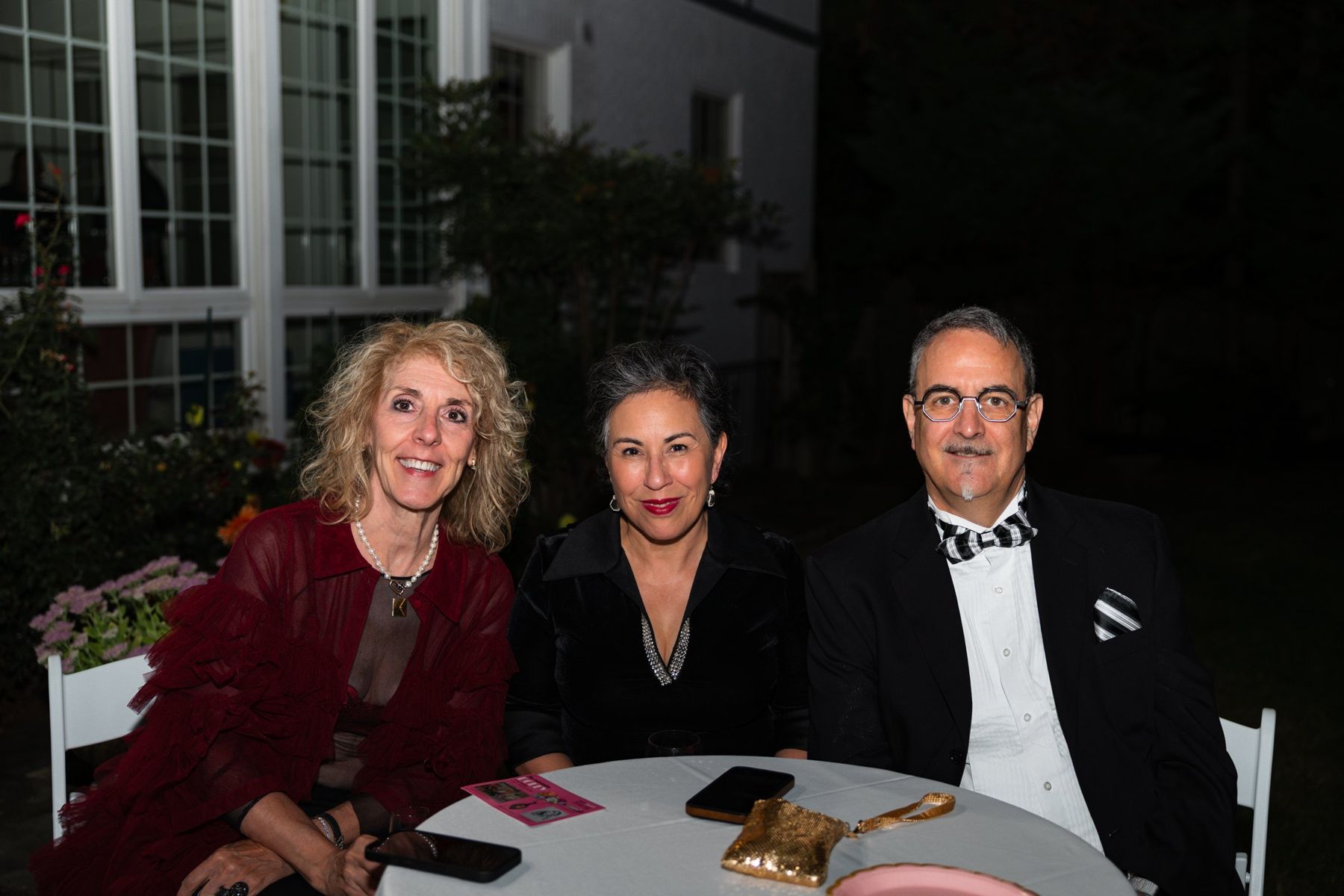
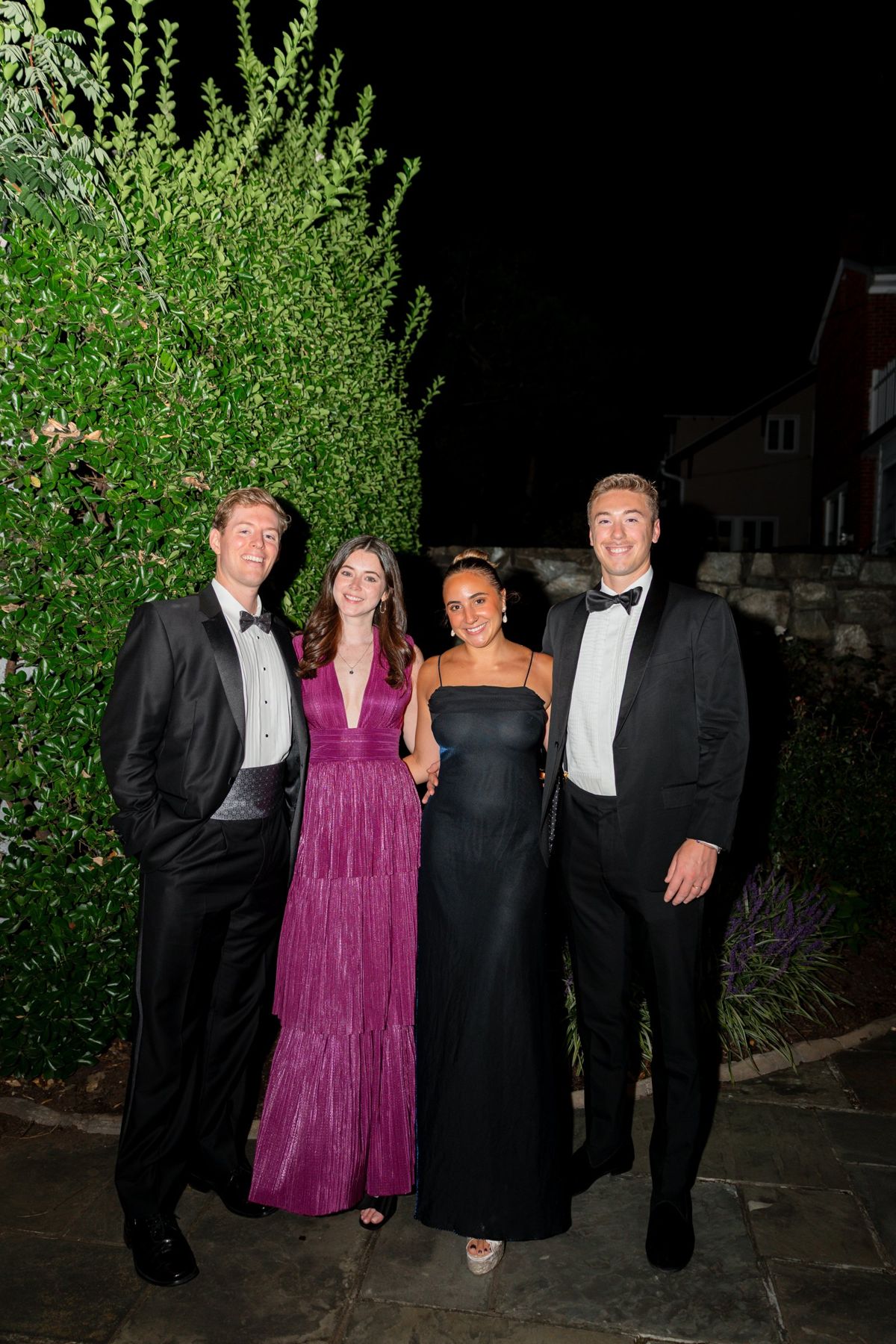
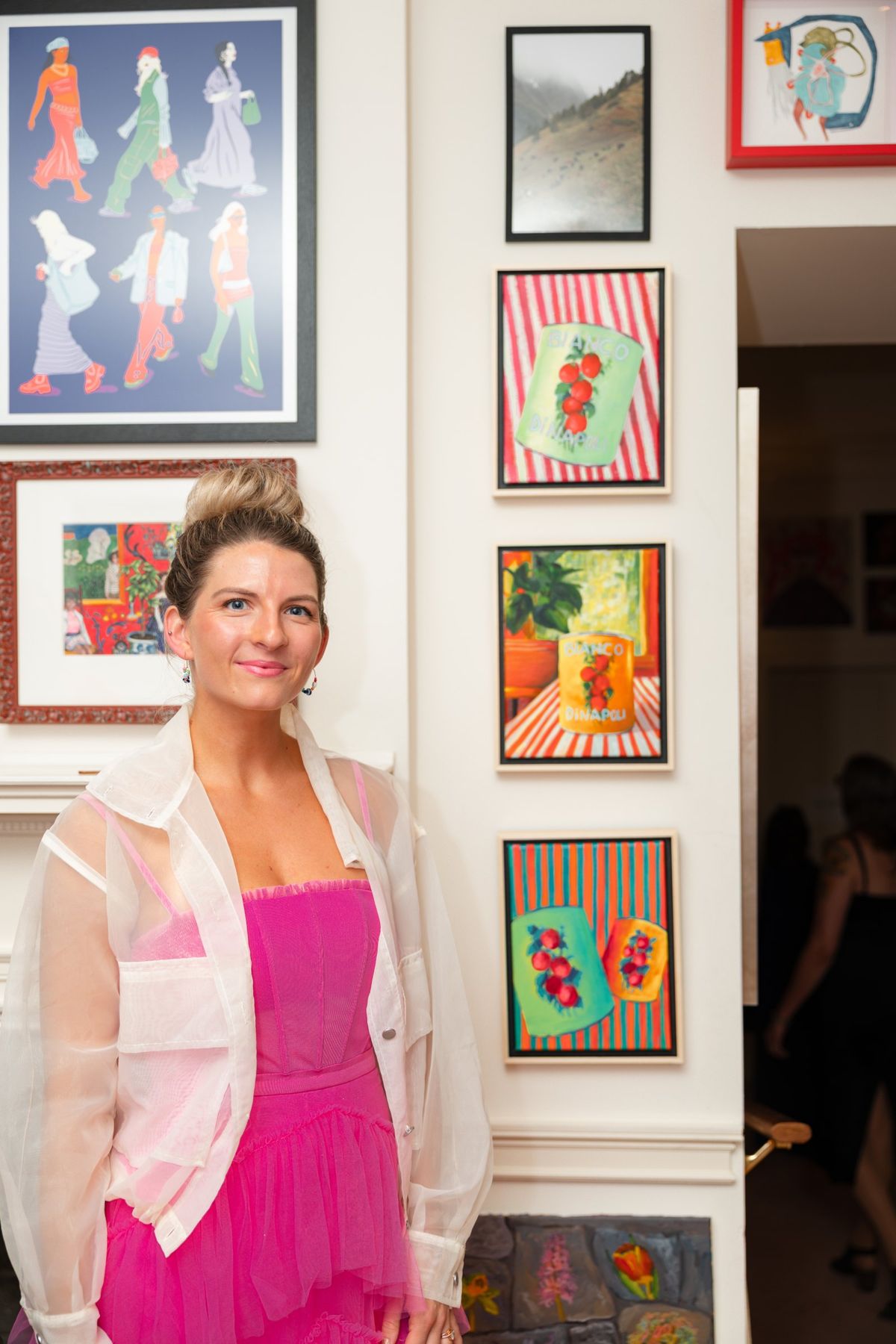
The gala ran from seven until eleven. An open bar stocked generously by District Champagne, hors d'oeuvres, music, and the artists themselves dressed to the nines and standing beside their own work, which was, as the press release put it, most of the point. Collectors met makers. Makers met each other. At least one guest left with a tiger's head on the brain and said so publicly.
Saturday and Sunday the house opened again from eleven to three as salon days: prosecco or a mimosa at the door, and the run of the mansion at your own pace. Nearly every piece was for sale, with eighty percent of each sale going straight to the artist who made it. That number is not a footnote. It is the reason The Consortium exists.
Sarah Jamison
Every photograph in this issue was taken by Taylor Cuozzo Dronebarger, who worked two jobs that night. On the walls, her glitched landscapes, Interference, Glitch 1, and Something In Between, drew a crowd of their own. Behind the camera, she made the pictures you are looking at.
It felt, by the accounts that follow, like a high-energy happening, a piece of DC art history, and the best day ever. Then it all came off the walls.
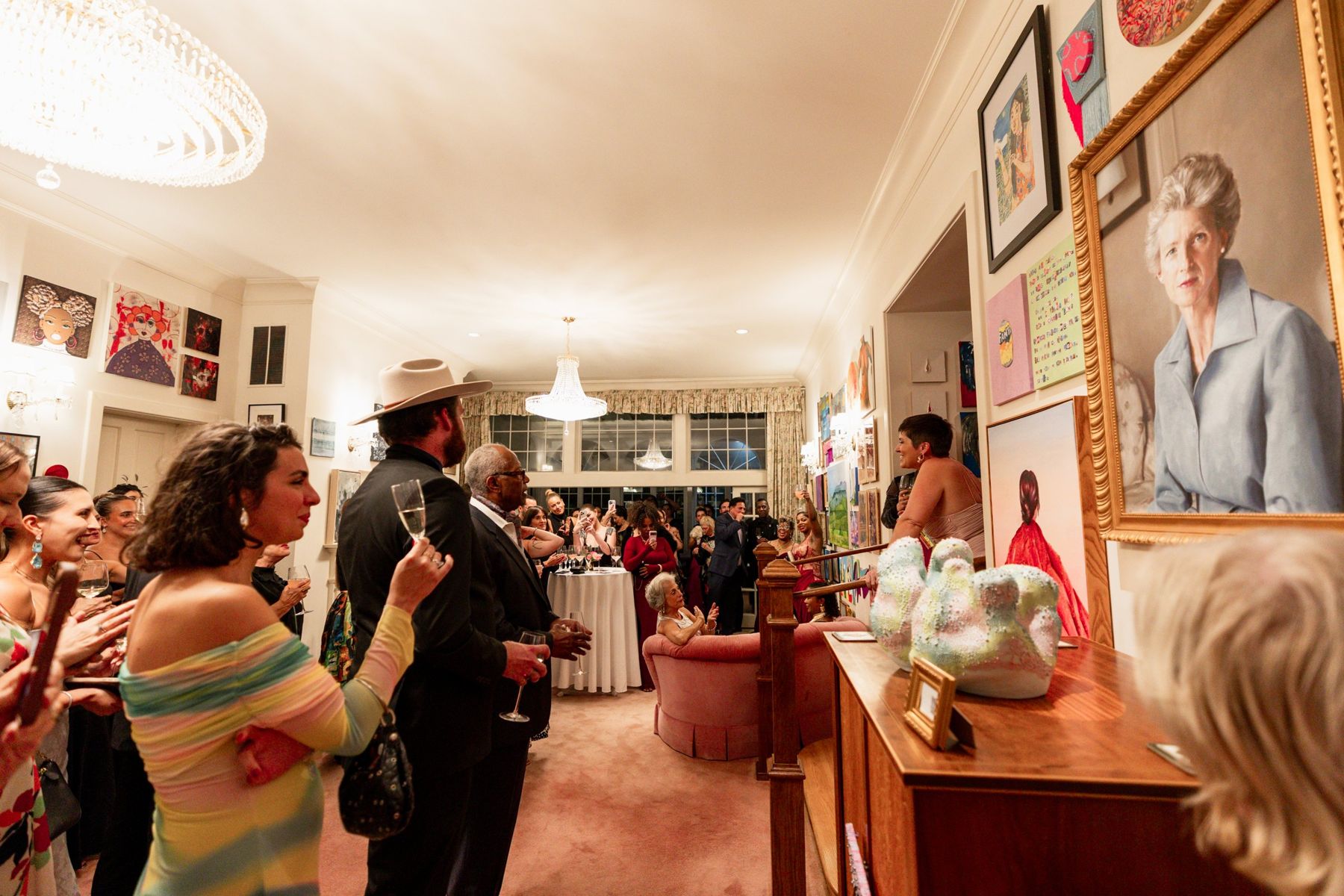
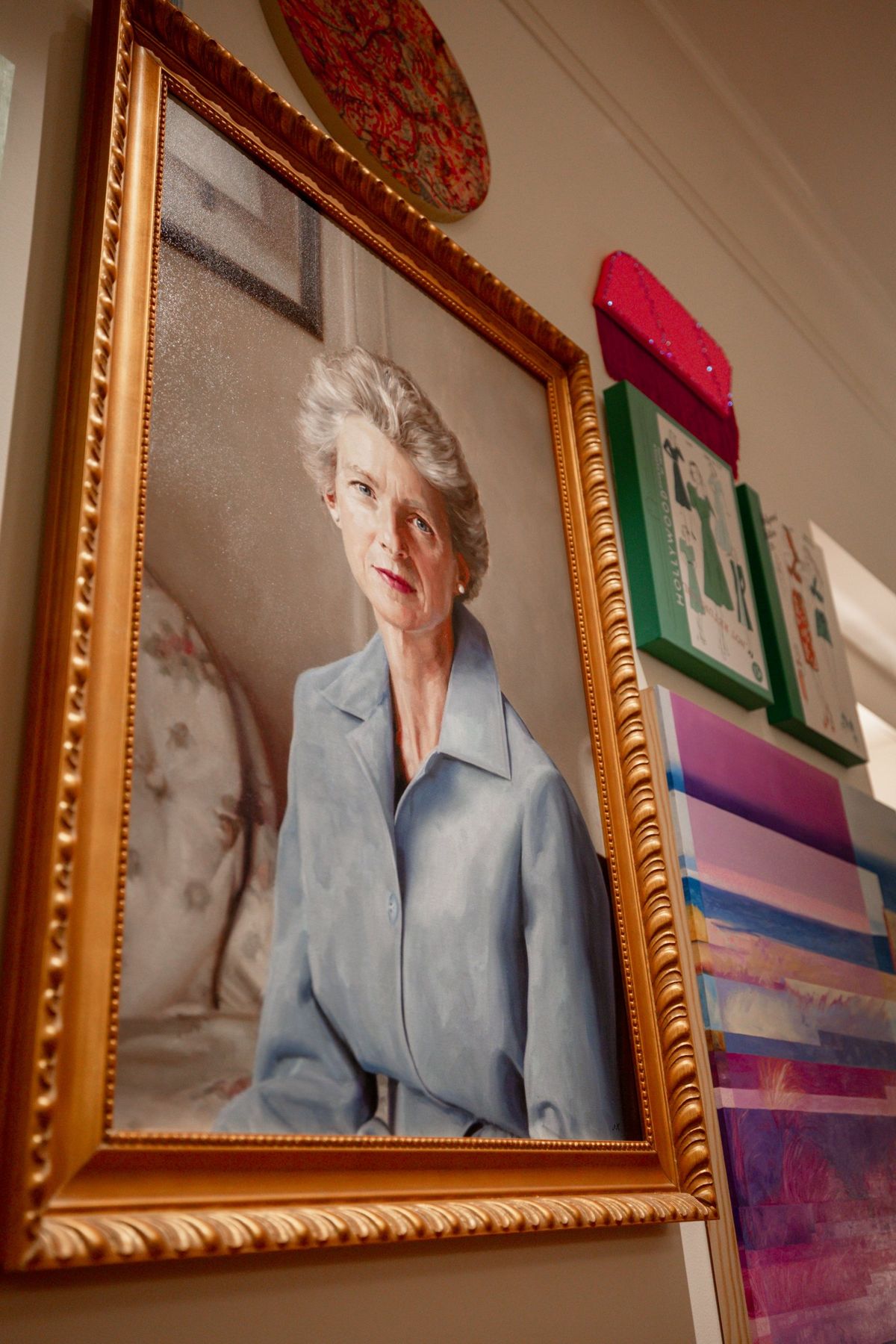
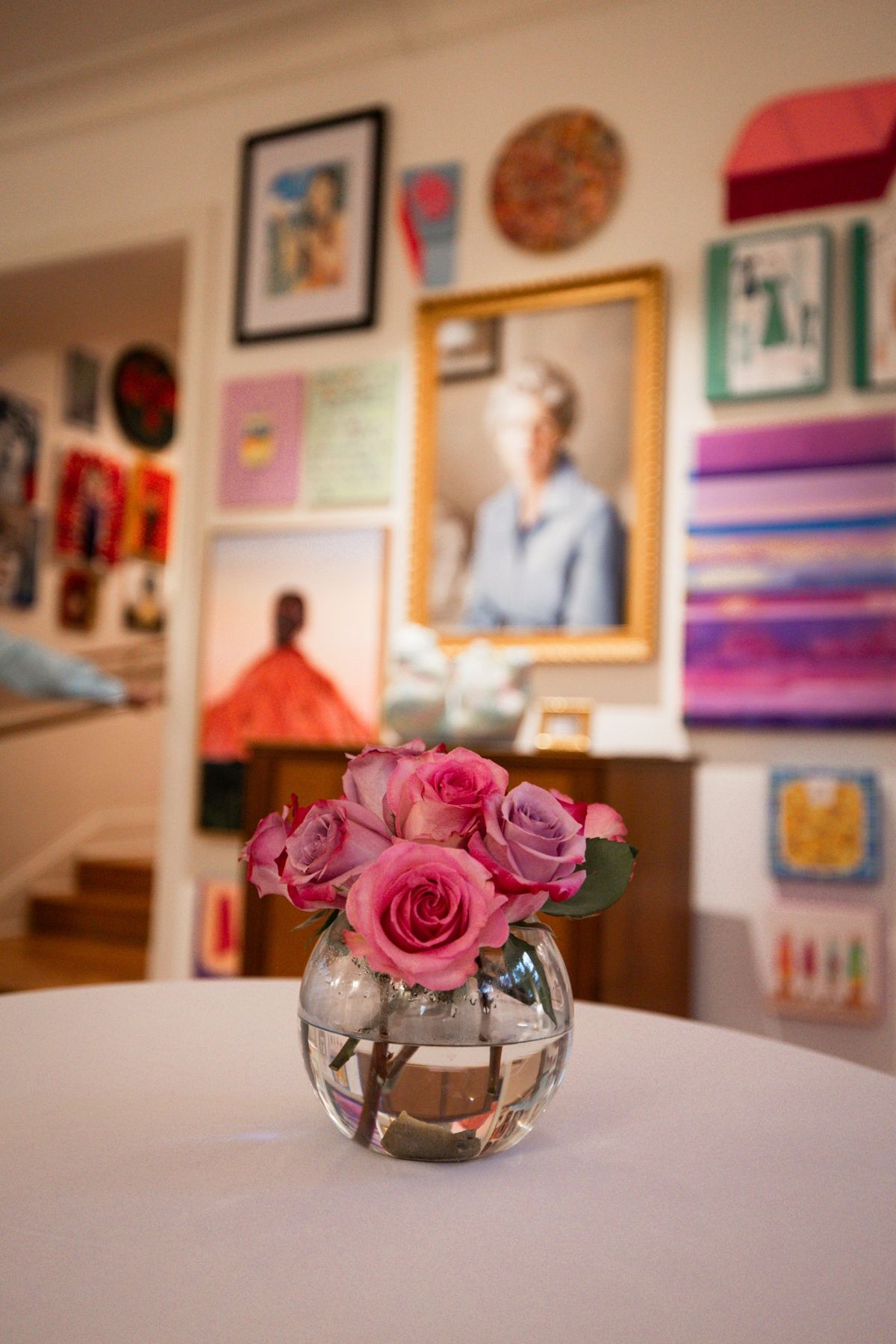
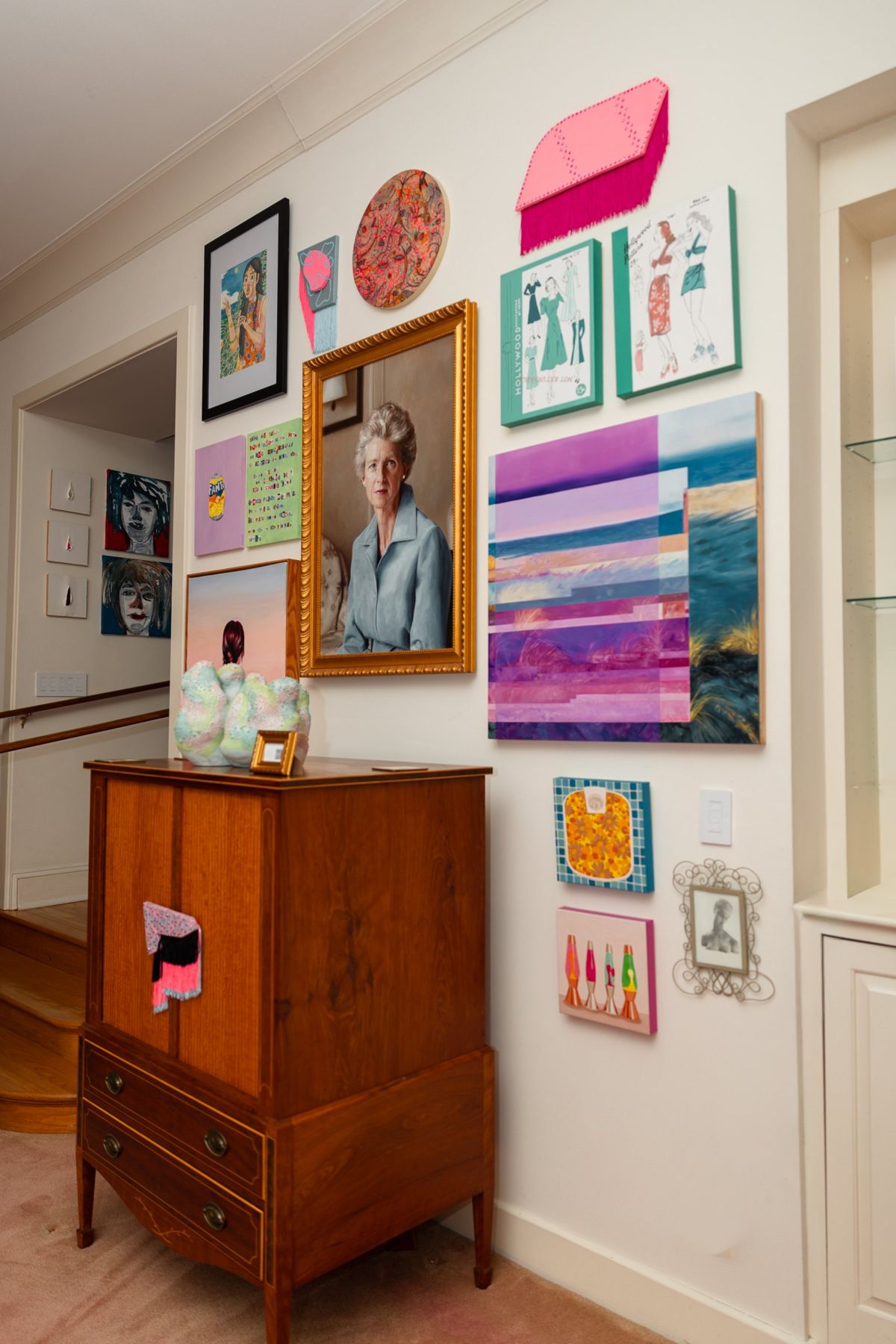
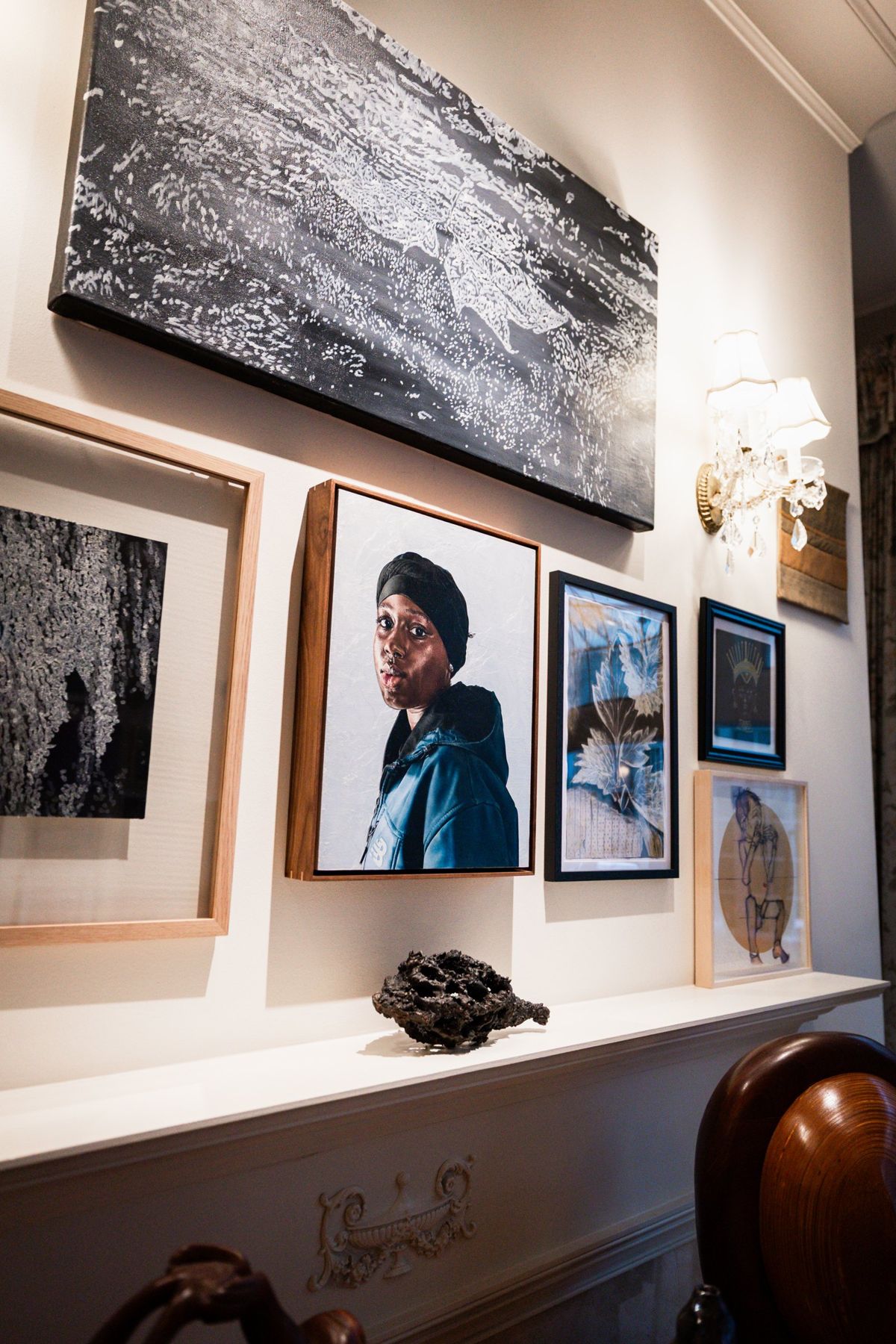
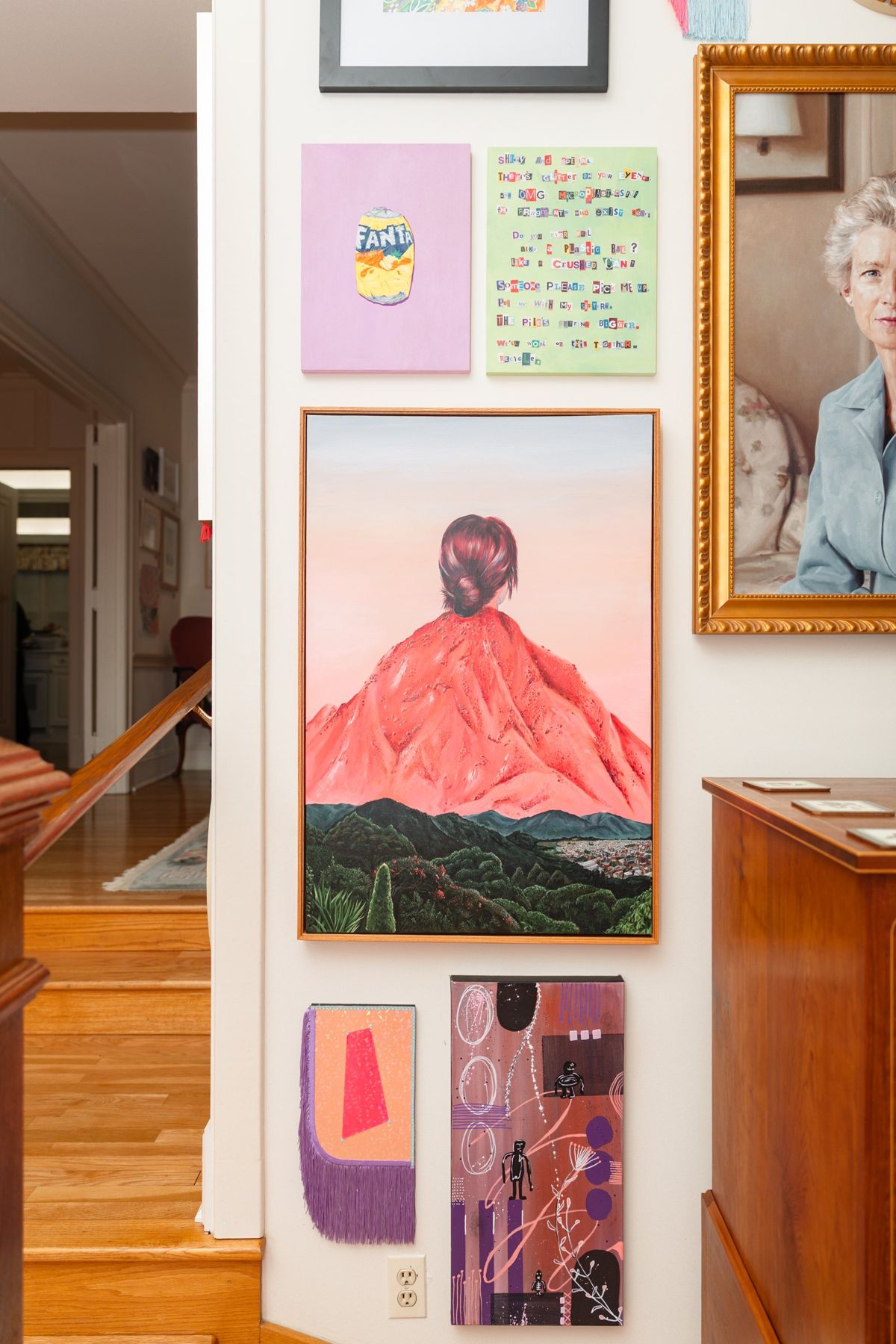
On the cabinet wall, between Alexandra Lemke's Girly Pop collages and Taylor Cuozzo Dronebarger's glitched landscape, there was a gold-framed portrait that was not part of the show. Number 91 in the program. Our host, Dr. Jane Ervin.
Dr. Ervin combined two Tudor-style houses in Upper Georgetown into one for a simple reason: she wanted more room to entertain. An author and educator, she believed that connection and interaction were how you built bridges between people from every walk of life, and she meant it, including across the full political spectrum. She was a strong advocate for women's rights and women's issues from the 1950s onward, and she took pleasure in celebrating achievement wherever she found it, in art, medicine, law, music, reading, and authorship.
She passed away in 2019. Girlism was held in her home with the blessing of her husband and son, who felt she would have been delighted to host a celebration of women and artistic expression. So the house did what it was built to do. It filled up. And the portrait on the cabinet wall kept watch over the whole thing, hostess in spirit.
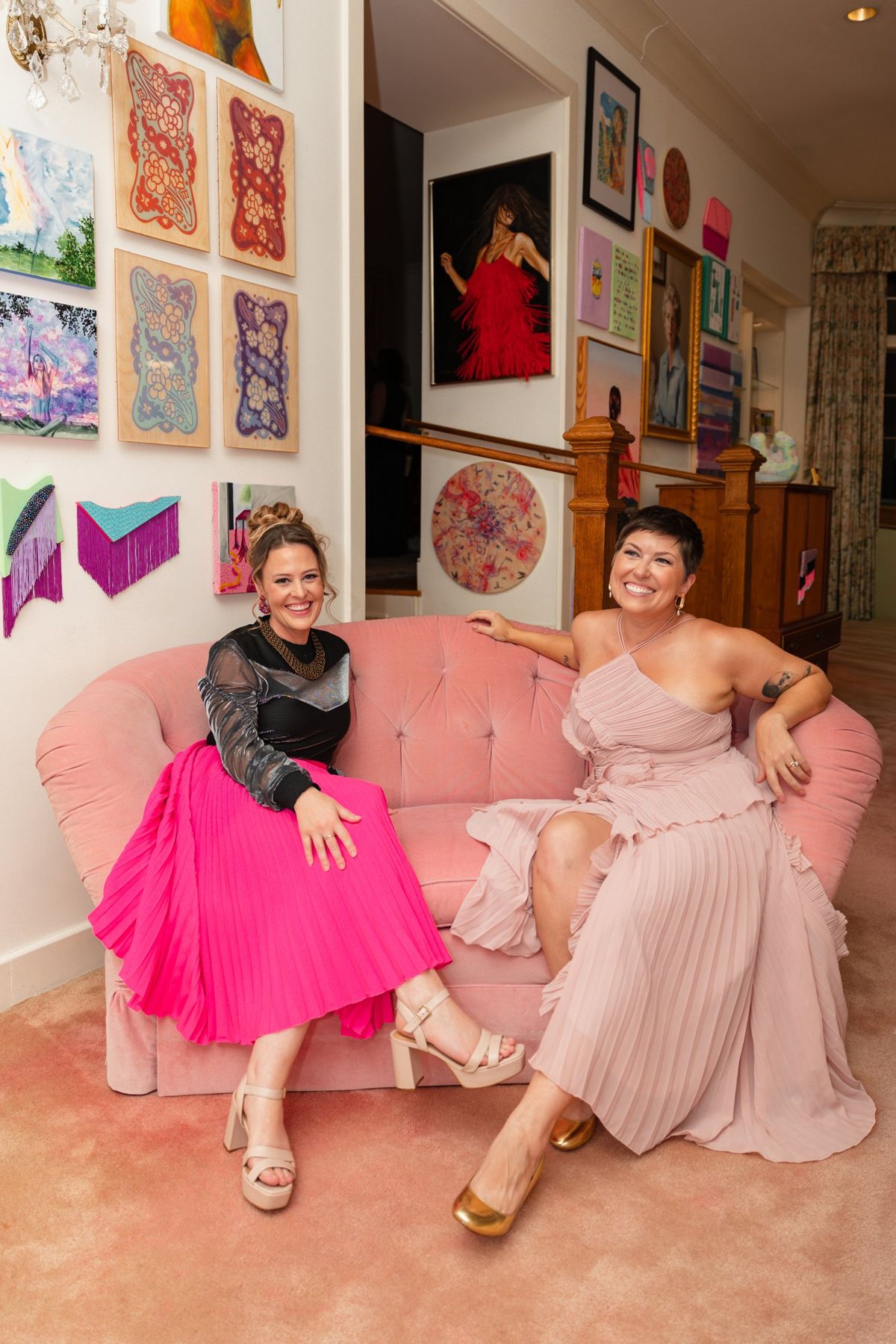
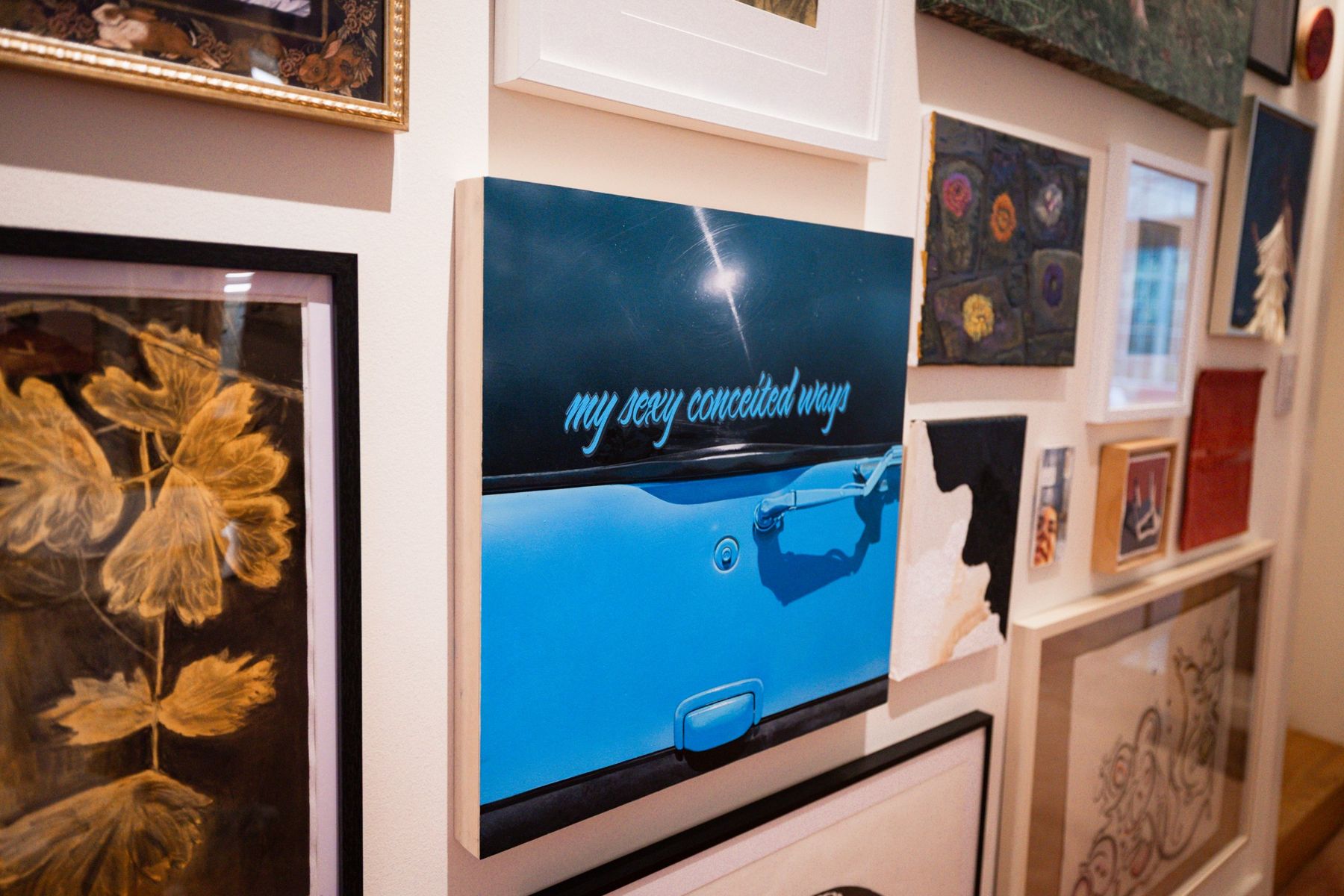
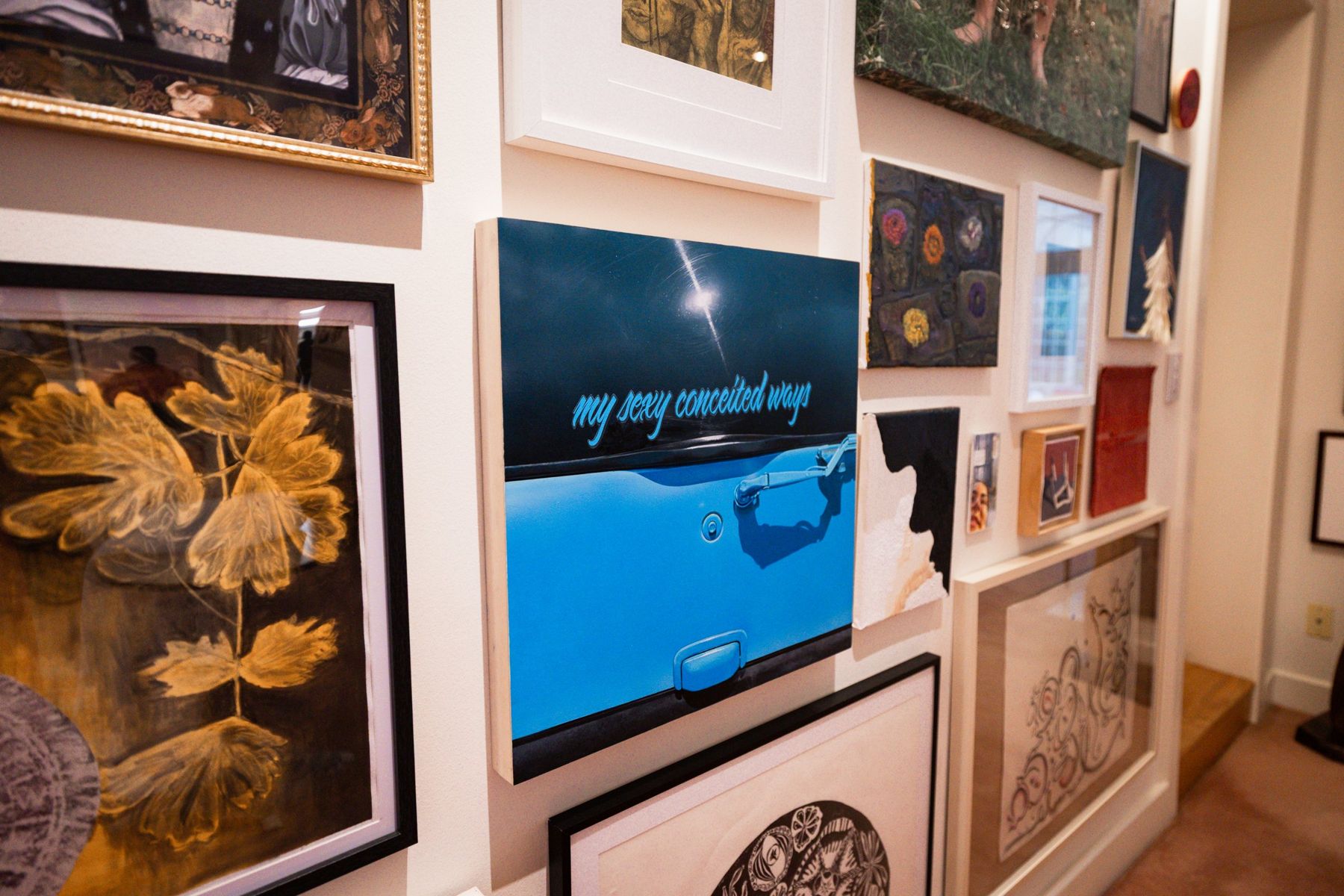
Sarah Jamison is a fine artist based in Washington, DC. Her drawings, paintings, and mixed media work reflect, confront, and dignify the female and mortal experience, using her own photography as reference. A graduate of the Corcoran College of Art + Design, she has had solo exhibitions at IA&A at Hillyer, Latela Curatorial, and Capitol Hill Arts Workshop, and she teaches at Washington Studio School and Capitol Hill Arts Workshop. At Girlism she showed five works, including Daria, a colored pencil portrait on wood panel with silver leaf, and I'm You But Stronger, the blue car-trunk painting that anchored the big gallery wall.
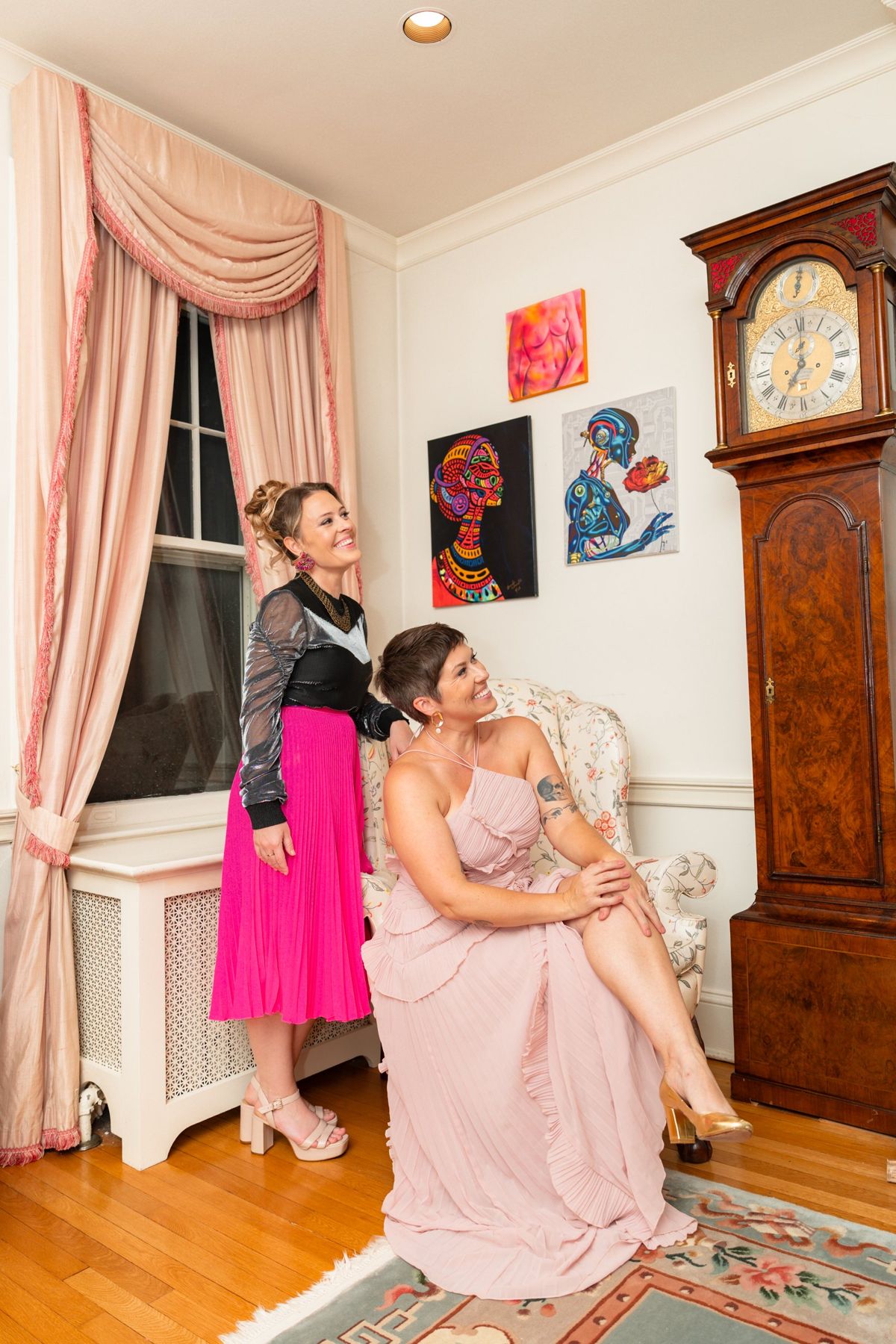
Stephanie Ervin is a Washington, DC artist working in watercolor and colored pencil. Her work celebrates abundant femininity, superimposing female figures onto richly detailed landscapes in lush, maximalist color. Through Wander Color Studio she paints live at weddings, hotels, and restaurants. She showed seven works at Girlism, clustered by the tall clock in the front parlor and along the pink sofa wall, where On the Other Side sold.
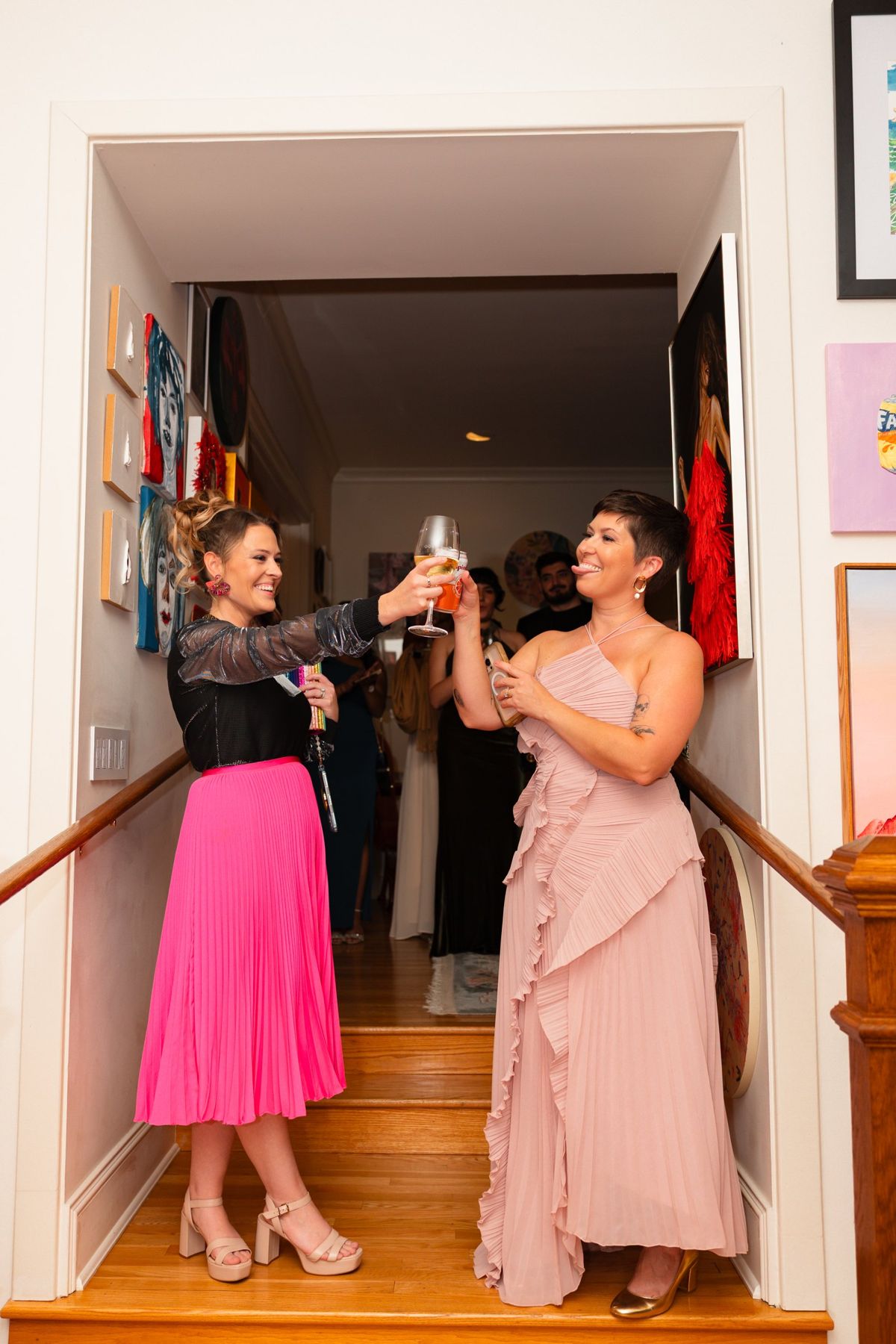
They met in a classroom. Ervin took Jamison's colored pencil class at Washington Studio School and came away with more than a technique. She liked Jamison's vibe and, more to the point, her whole approach to being an artist, the way she carried the job. So she asked her to be her mentor. Jamison said yes. Mentor became friend, friend became art best friend, and somewhere in there the two of them discovered they shared the right kind of delusion: the compatible kind, the kind that makes magic happen when you point it at the same wall. First The Consortium. Then this show.
Together they founded The Consortium, a women-led collective dedicated to elevating artists, curators, and collectors. Their stated belief is that building an art collection is an act of creation, one that transforms spaces and lives. Their stated mission is to empower artists to thrive and to make collecting feel accessible rather than intimidating.
Girlism was the first time the mission had a room. The two organized it from the open call through installation, with many, many volunteers beside them: jurying the submissions, coordinating drop-off over a September weekend, hanging fourteen walls, numbering 171 pieces in hang order, and building a phone-friendly digital program so that any guest could tap a number and learn who made the piece and what it cost. Special thanks go to Marianne Alberti, Lindsay Gressard, and Rachel Wallach. On the night, the founders wore black tie and worked the room.
The morning after, Ervin wrote her thank-yous on Instagram. To everyone who hung work, carried a ladder, poured a drink, or collected a new piece. And to Jamison, for the creative partnership, "and for our compatible measures of delusion."
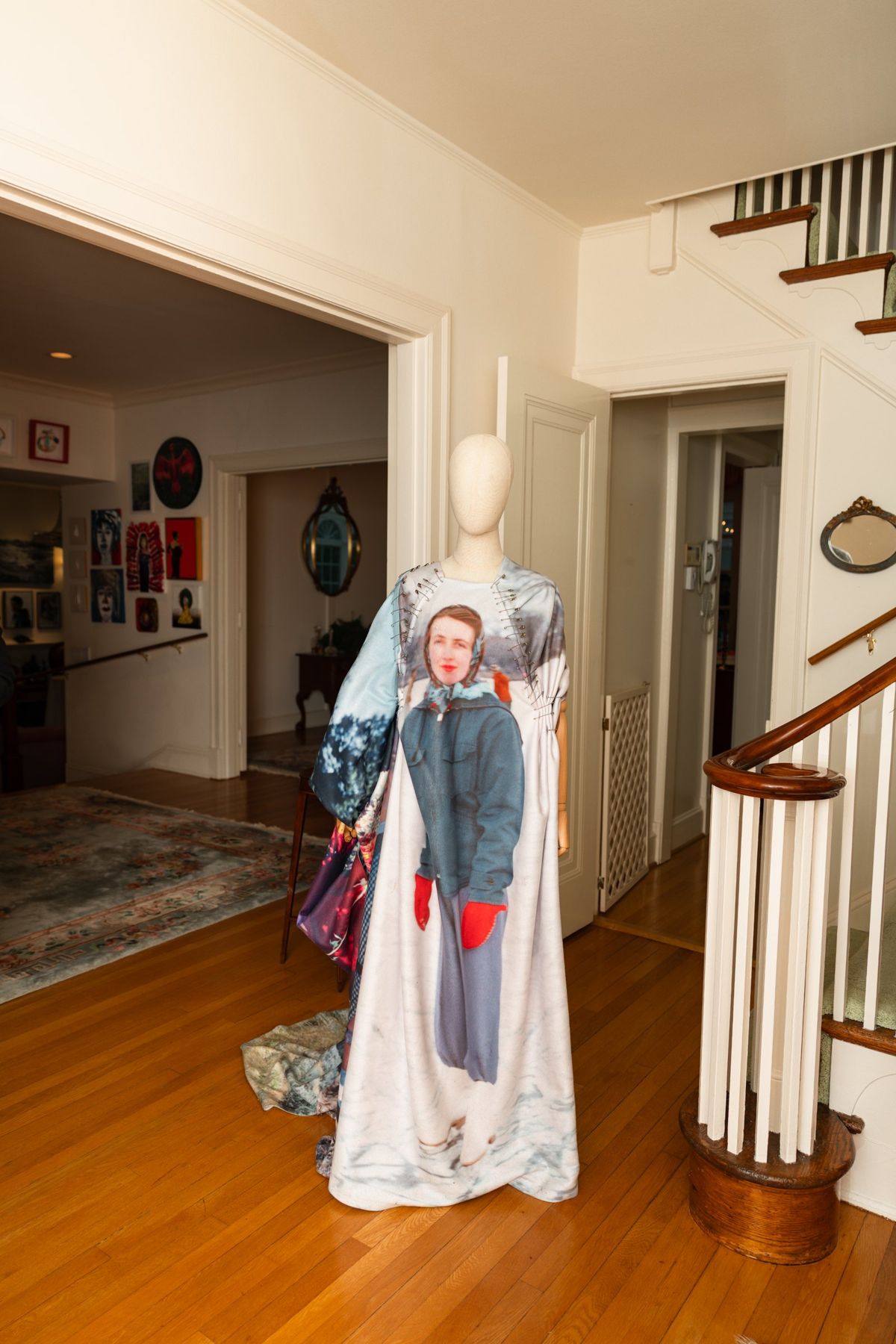
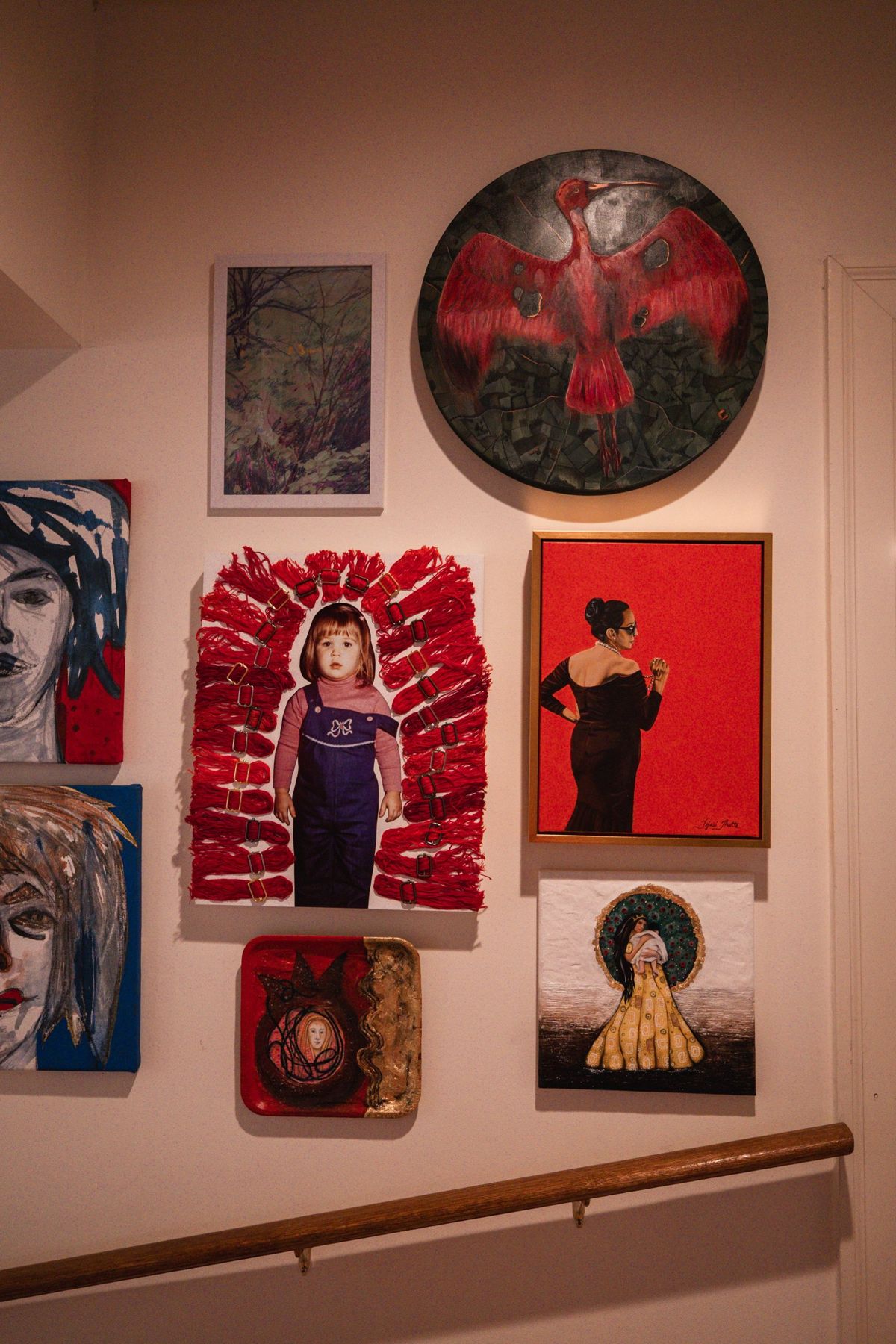
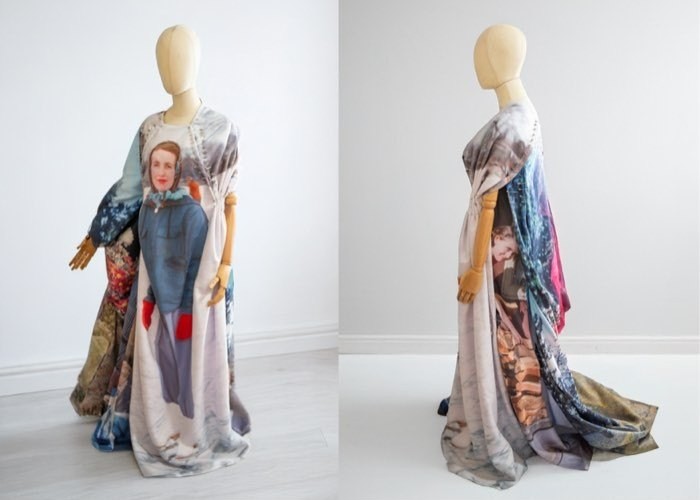
One piece, and it needed no company. Deborah Lash's Hold Still, Janet, sixty-six inches of photograph and textile bound with safety pins, the artist's signature material, chosen for its ability to accommodate any change.
Ava Bagley's Guanyin America, a four-by-five-foot canvas priced at $15,000, was the largest painting in the show and the most expensive. Bagley, who trained at the School of the Museum of Fine Arts in Boston, favors bold color and clear composition, and this one held the wall. Sheila Dee Godlock's paper clay sculptures kept it company: Taking Up Space on the desk in front of the mirror, and When She Realized She Was Beautiful, She Started Dancing on the round table.
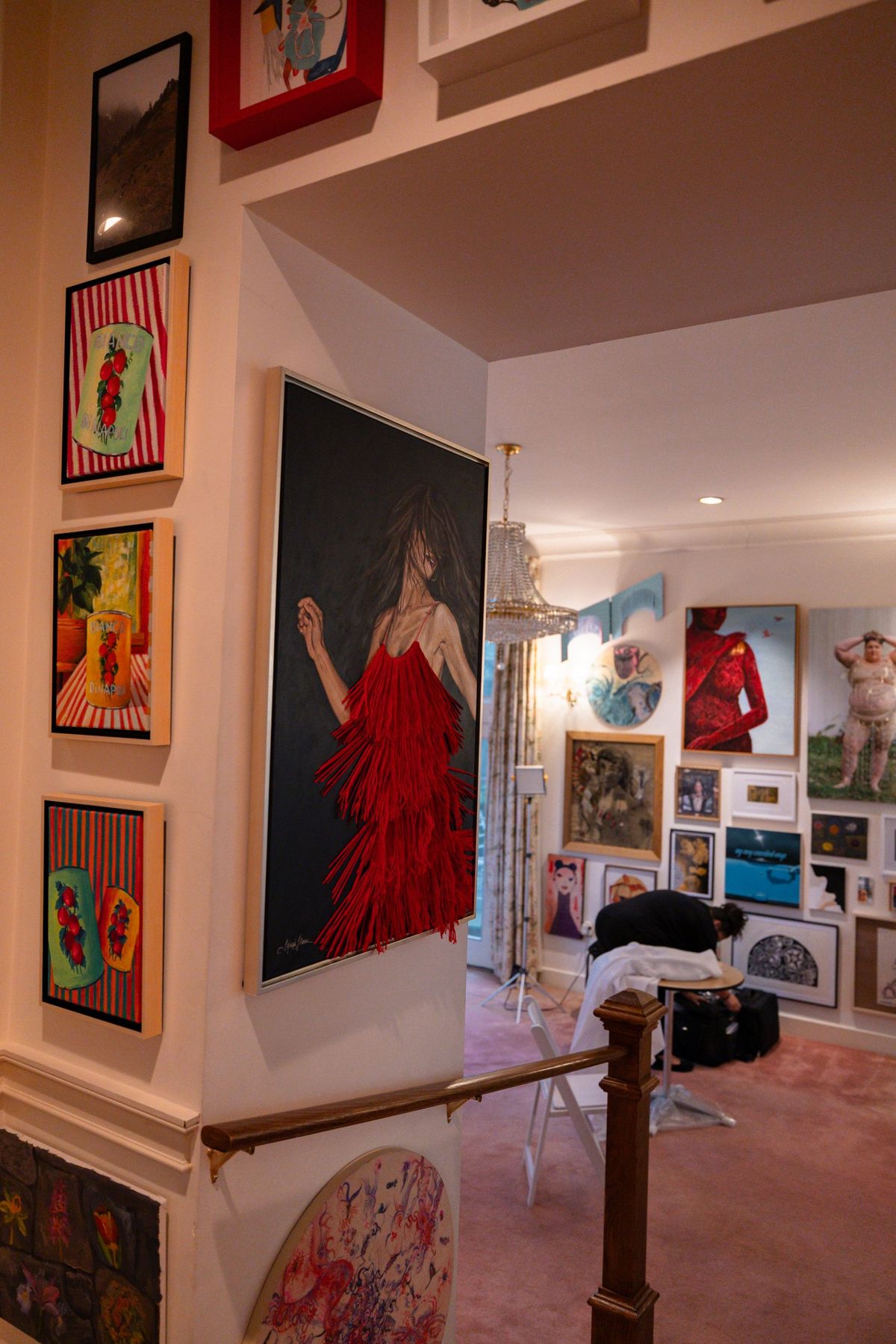
Sarah Jamison's The Main Character. Kelly Posey's Nat. Geo.: Bio Station. Rachel Wallach's The Vegetarian. A mother-daughter embroidery, Aging Gracefully, designed by T. E. Gross and hand-stitched by her daughter Catherine Douglas Moran. Kate Fleming's Medlar. Stephanie Ervin's Bunny. Lindsay Mueller's Stump Study.
Nil Navaie's Noodles of Hope, three Washington watercolors by Lourdes Lopez-Isa, who left corporate law for art this year, and Katie Hunter's Community.
Ervin's cluster: That Fire Kind, Possibilities, Manifested Abundance, Don't Stop. Ania Siniuk's Girls. Two portraits by Brenda D Chandler, who interned at the Smithsonian Anacostia Community Museum in her mid-fifties and went on to a fine art degree. Jamison's The Three Graces. Godlock's Bloom on the mantel. Marianne Alberti's Peril at the Dream House, original not for sale, prints of twenty-five.
Nineteen pieces climbing the stairs. Martha Holmes's Chromatic hybrids, watercolor and pattern from a biomedical scientist in Annapolis. Katty Huertas's What Remains, a twenty-inch tondo. Sarah Muse's Tomato Cans. Jen Saavedra's three small square photographs, outsideofmybody, igottabecareful, tillthedaythatidie, from an ongoing body of work about two women as life partners. Juliana Vallejo's Jeannette II and IV. Tejasi Thatte's Velvet and Pearl 2. Nil Navaie's Umay.
Two pieces. Madeline A. Stratton's Untitled arch in mixed media on wood, and Erin Friedman's Wake Up.
Tejasi Thatte's Antoinette, thirty-eight inches of figure at $6,000, and Kelly Posey's Psychedelic Zooplankton #2.
Thirty-three pieces, the densest hang in the house. Stratton's 592, two hinged arch panels shown open. AnaYelsi Velasco Sanchez's Hair Full of Secrets and Say What? Courtney Applequist's Arcs of Absence, No.1 above No.2, and her After Schiele, Pregnant Woman, 1910. Huertas's Ouch! at $4,500, and The Outskirts. Deborah Lash's Stretch (Self-Portrait), fifty inches tall. Susan Lefler's prints, including The Inky Sky Enveloped the World and All Was Briefly Well. Maggie Morris's Skate Girls of Lisbon. Trisha Gupta's Kohl, Snakes, and Cobra. Marisa Stratton's Eye of Clarice Lispector and Self Portrait on FaceTime. Michelle Kondrich's The Favourite. Carla Chissell's I want to come back as a Flower and Code Switching. Naz Locke's Leaves in Space I (Gold). Jamison's I'm You But Stronger. Kate Fleming's Lawn Chair on the Deck, Knocked Over. Maggie Gourlay's Color Fields, Sappanwood. Aida Darmaah's From Death to Birth.
Nami Oshiro's I Have the Keys to Paradise but the Door Is Gone. Four of Stratton's Lagniappe series, one hung on the cabinet door itself. Tara Barr's nostalgic pop oils, Hollywood 1663 and Hollywood 1581, Weighty, Lava Lamps. Alexandra Lemke's Girly Pop (1) and (2). Taylor Cuozzo Dronebarger's Interference. Huertas's Mountain Mother. Makeda Smith's ceramic Complusion on top of the cabinet. Marisa Stratton's Wilhelm Lehmbruck Bust Study. Velasco Sanchez's Clair De Lune. And, in the gold frame, Dr. Jane Ervin.
Seventeen small works living among the sculptures. More Chromatic hybrids. Maggie Morris's Chamonix Morning, Mont Blanc Miniatures, Bains des Pâquis. Kelsi Schaffer's collage portraits, Eternity, The Bride, Weird Sisters, roman statuary played as tarot. KC Coleman's Lonnie. Kate Fleming's Beverly Beach, OR and Lubec, ME (Telephone Pole). Tara Barr's McCalls Skirts. Posey's Invasion of the Endangered Species. Marisa Stratton's Scroll Box and Small Scroll. Marianne Alberti's You're buying drinks, set in an old clock frame. Milan Warner's Fruit 3, a sculpture priced at $7,500.
Sara Diani's two thirty-six-inch squares, Lace Dreams on the left, Cupped on the right. Cropped, saturated, soft-edged figuration from an Afghan-American painter exploring intimacy and the emotional architecture of attachment.
Sarah Bell McLean's 37.76508° N, 79.07126° W, a landscape built from thousands of small black and white oil marks. Gourlay's Color Fields, Indigo and Chestnut. Erin Friedman's Deep in Conversation. Jamison's Daria. Naz Locke's Leaves in Space Silver. Carla Chissell's African Glory. Milan Warner's Fruit 2 on the mantel. Applequist's After Schiele: Newborn Baby 1910. And Margery Goldberg's wood: Harmony (in Wood) and Attitude on the table, We're All in This Together on the floor to the left of the fireplace. Makeda Smith's Soft Body sat among them.
Thirty-eight pieces, the last wall and the largest. Deb Almond's four framed pairings of endangered animals and flowers, Snow Leopards and Lady's Slipper Orchid among them. Taylor Cuozzo Dronebarger's Glitch 1 and Something In Between. Danielle Benyard's three not-for-sale canvases, Soul Exposed, Fragile, Lady with Fruit. Marcia Green's Mosaic Elephant. Lindsay Mueller's A Trip Home in a handmade poplar frame. Velasco Sanchez's I'm Not A Soldier and Floating On By. Ervin's A Breath of Fresh Air and On the Other Side, marked sold. Rachel Wallach's Good Luck 1-4, four screen-printed panels sold together or apart. Lindsay Gressard's Ancient Pyramids of Sucra. Tejasi Thatte's Abundance. Jamison's Unlimited Potential. Nami Oshiro's She Saw the Face of God and It Was Bad, "Now Don't Go Feeling Sorry for Yourself," and The Hedgehog's Dilemma. More Lagniappe, plus Stratton's Isaac and Avenue A. Michelle Kondrich's Greta. Mathilde Grant's two photographs, Threshold State and First Instruction. Posey's Hong Kong Hibiscus. Diana K. Bulger's Calico Cat. Nil Navaie's Noodles of Eternal Cycle of Life. And standing at the left of the wall, Margery Goldberg's He She Tree, fifty-eight inches of carved wood at $12,500, with Stratton's Lagniappe 15 hidden behind it for anyone who thought to look.
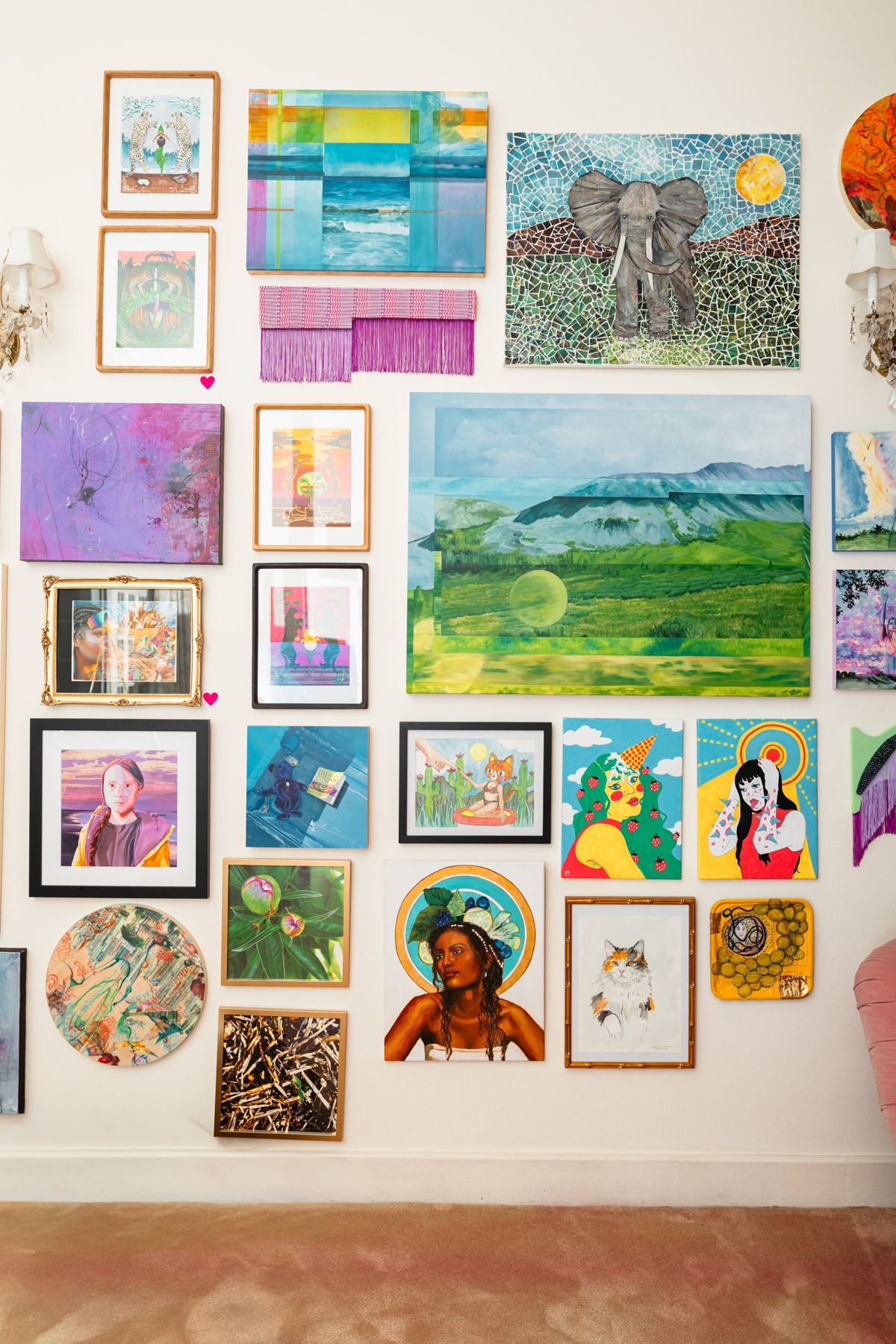
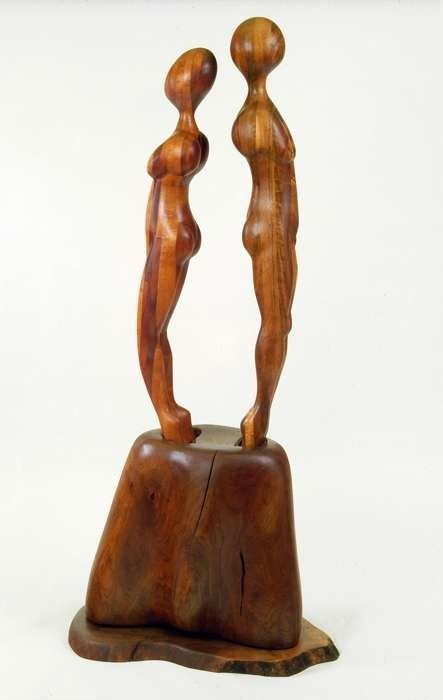
Margery Goldberg
Over fifty years, over six hundred works, and, in her own words, a lady with a chainsaw. Goldberg's obsession with wood has not waned; she thinks of trees as ancestors and family. Her four sculptures at Girlism, from Harmony (in Wood) on the mantel-wall table to the He She Tree presiding over the pink sofa wall, gave the show its heaviest, oldest, most rooted voice. Zenith Gallery.
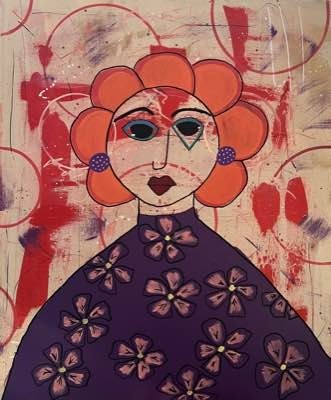
AnaYelsi Velasco Sanchez
Venezuelan-born, Velasco Sanchez moves between vibrant portraits, symbolic figures, and intuitive abstraction in acrylic, with bold color and layered, textured paint doing the talking. Her work takes on justice, liberation, mental health, and identity. Five pieces across three walls, from Hair Full of Secrets on the big gallery wall to I'm Not A Soldier on the pink sofa wall.
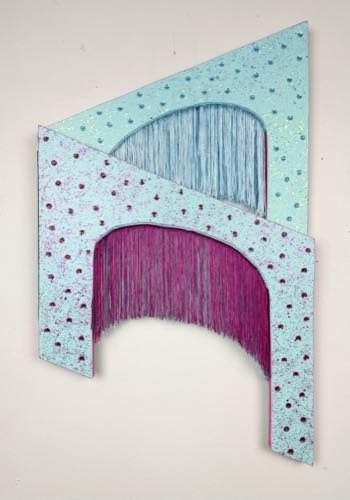
Madeline A. Stratton
Thirteen pieces, the most of any artist, from the hinged arch 592 to the Lagniappe series of small wood-panel works that turned up on the cabinet door, the sofa wall, and behind a sculpture. Stratton holds an MFA from MICA's Mount Royal School of Art, an MA from Christie's Education, and has shown at the Kreeger Museum.
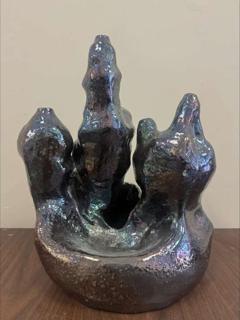
Makeda Smith
Two ceramic sculptures, Complusion on top of the cabinet and Soft Body on the mantel-wall table, from an artist who works intuitively with clay and lets the material argue back. Smith's forms balance structure and spontaneity, and in a house full of flat work they were the pieces people reached toward before remembering not to touch.
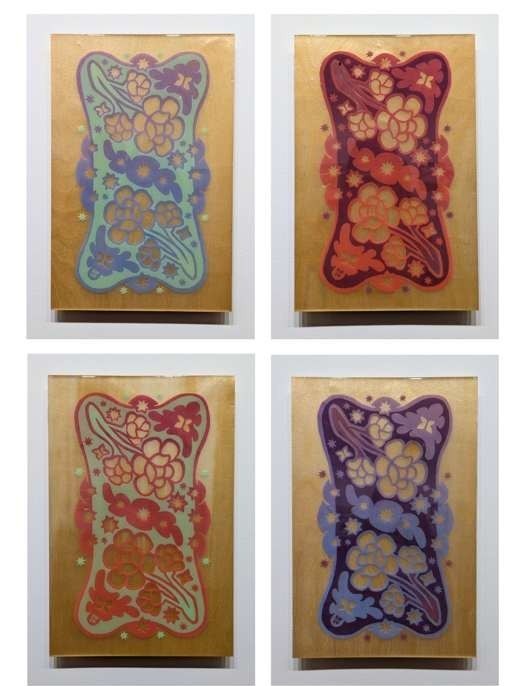
Rachel Wallach
Wallach works in a kaleidoscope of media. She sculpts fantasy creatures out of felt and rhinestones that leap from wall mounts, hang from ceilings, and usually glow in the dark. Lately she has taken up screen-printing with her husband, Mike O'Brien of Red Table Press, pressing bold folk-art designs onto wood and paper. At Girlism: The Vegetarian by the pink armchair, and Good Luck 1-4 on the sofa wall, among the first pieces she and Red Table Press printed together. All four sold.
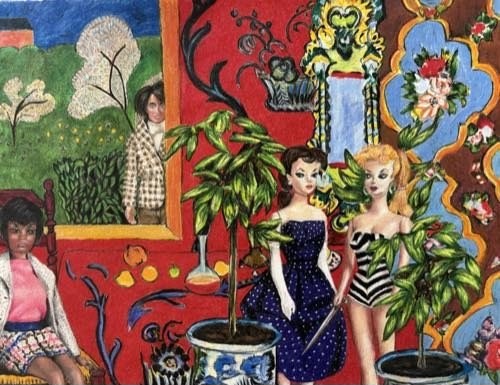
Marianne Alberti
In 2023 Alberti retired after forty years in the hotel business, in her words with a skip in her step and a song in her heart, and never looked back. "I know that my soul is an artist." She is endlessly inspired by the strength, wisdom, and empathy of women and girls, and she showed two works to prove it: Peril at the Dream House, original not for sale, edition of twenty-five prints, and You're buying drinks, set into an old clock frame on the built-in shelves. Her closing line in the program: "Our day is coming."
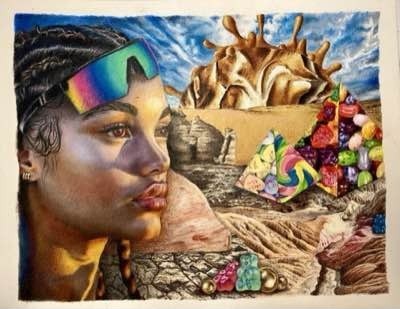
Lindsay Gressard
Lindsay Gee is an emerging large-scale muralist whose studio practice takes a much smaller view, using the meticulous precision of colored pencil to zoom in on an imagined inner world. Rendered in bright, candied color and shot through with surreal detail, her imagery is joyful and foreboding at once, with a childhood obsession with candy surfacing throughout. Ancient Pyramids of Sucra, on the pink sofa wall, was eleven by fourteen inches and not for sale.
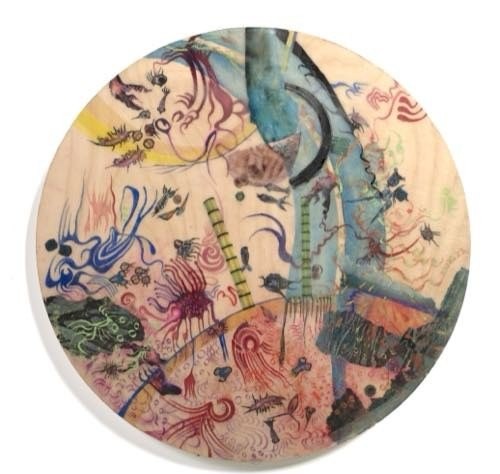
Kelly Posey
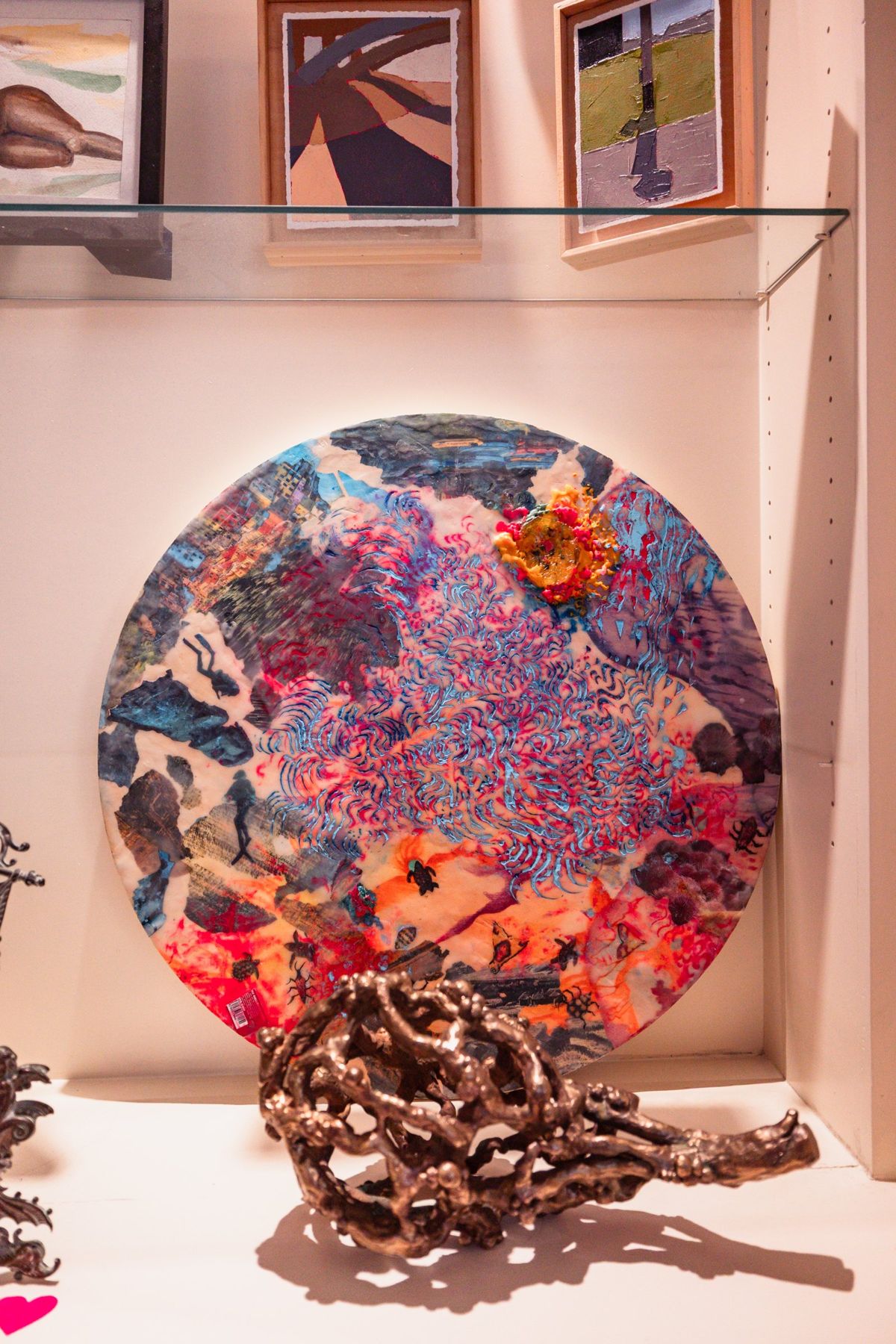
Seven circular encaustic works, each cut from National Geographic issues spanning the 1960s to the magazine's last print run in 2024, re-contextualized into something psychedelic and strange. Bio Station, Solar Mothership, Invasion of the Endangered Species, Hong Kong Hibiscus. Posey's tondos punctuated four different walls.
Deborah Lash
Photograph, textile, safety pin. Lash's three works, including the entryway's Hold Still, Janet and the fifty-inch Stretch (Self-Portrait), explore memory and family history through materials that can accommodate any change. She was the first thing guests saw and one of the last things they talked about.
Katty Huertas
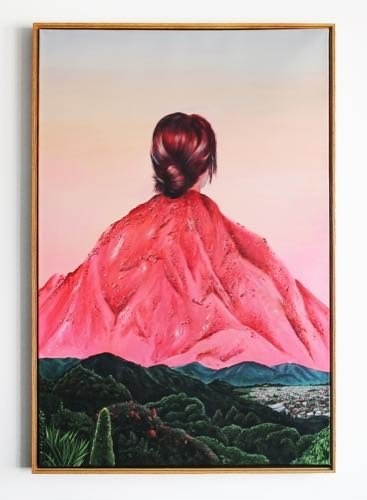
Born in Bogotá, influenced by magical realism and Colombian folktale, Huertas builds surrealist figurative work about immigration, identity, and environmental justice. Ouch!, Mountain Mother, The Outskirts, and What Remains were among the show's most photographed paintings. Her latest public installation is on view now at the K Street underpass.

Nami Oshiro
Okinawan-American, raised in Florida inside an American doomsday cult, Oshiro makes drawings and paintings about disconnection. Her titles alone, She Saw the Face of God and It Was Bad, The Hedgehog's Dilemma, earned a second look. Her work has been described by viewers as "bizarre," "unsettling," and "very upsetting to my friend Daniel."
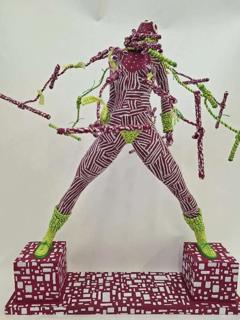
Sheila Dee Godlock
A full-time mixed media sculptor who found her life's work in a Torpedo Factory class in 2000, Godlock brought three paper clay figures that were whimsical, fun, and everywhere: on the desk, on the round table, on the mantel. Taking Up Space did exactly that.
Girlism was open for three days, on purpose. A salon hang in a private house cannot stay up forever, and the short run was part of the fun. You came Friday in black tie or Saturday in flats, but you came, because by Sunday at three it was over.
The Consortium's first annual show now has a precedent to live up to. Over 150 works. Over 50 artists. Eighty percent to the maker. A house built for gathering, filled to the ceiling, and a hostess in a gold frame who would have loved every minute.
The walls are bare again. See you next year.

thedistrictconsortium@gmail.com